Mission Statement

To Ensure a Fair and Equitable Transition of the HOA from the Builder to the Homeowners, we invite ALL residents to participate in the Process

  • New HOA Board Members

FINANCE

F1.        Please explain the math on page 6 of the Budget Webinar presentation posted to Town Square since $3,535,503 minus $3,698,298 does not equal ($182,444) but rather equals ($162,795).  Also, the Total Assessment Income number on page 6 is incorrect, and the Total Income number on page 7 does not match page 6.

F2.        Please explain why you changed the Residential Assessments income to reflect a higher number of houses closed on 1/1/26 without also changing the expense projections that are “per house” based (e.g., Master Association Fee, Trash, Cable, Landscaping).  Will you revise and issue a corrected 2026 budget?

F3.        Please explain your 2026 budget assumption for number of houses used for Management Fees.  The note says “per contract it’s $5.50 per house”, however $57,497 divided by $5.50 per house per month equals 871 houses.

F4.        Why are you adding a full-time maintenance tech to the payroll, and do you expect to continue to add personnel to the payroll each year?

F5.        Why are none of the increased 2026 repair and maintenance expenses, especially those based on aging and depreciated equipment, funded by our reserves?

F6.        For KHOV, how many houses do you expect to close in 2026?

F7.        What methodology is used to decide the balance between resident vs KHOV funding of the operating budget?

F8.        Why was the 2025 reduction in LOCB dues not refunded to homeowners?

F9.        Why did the Reserve Funds on the Balance Sheet increase by only $22,366 from 2/28/25 to 3/31/25 when the March 2025 reserve income was $27,454 (i.e., where did the missing $5,056 go)?

F10.  Did KHOV contribute the additional $182,000 to our reserves in 2025 as reported in the Reserve Study?  It was not in our Reserve Funds as of 11/30/25.

F11.  When will the 2022 audited financial statements be posted to Town Square?

F12.  Can the Board of Directors and Finance Committee meeting minutes be posted to Town Square on a timelier basis?

F13.  Please explain the YTD property/real estate tax credit of $24,794 shown on the November 2025 income statement.

F14.  Please detail what’s in the un budgeted YTD ~$95k of other supplies/repair & maintenance expense shown on the November 2025 income statement.

F15.  Why were the projects to plaster the outdoor and indoor pools due to age and visual deterioration not performed in 2025 as recommended by the Reserve Study?

F16    In December 2024, Associa sent Berkeley County a letter representing $1,347,772.08 of HOA reserves for roadway and drainage maintenance which covered total number of lots platted through phase 10. The revised Reserve Study dated June 13, 2025 was corrected to show the balance sheet closing balance for Street Reserves at the end of December 2024 of $866,481 and listed Additional Reserve Contributions for 2025 of $182,000 representing $1,000 for each of the 182 lots in Phase 9&10.   The December 1st Minutes of the Finance Committee of the HOA Board of Directors note that “We continue to wait for an update from the KHOV board as to when the Phase 9 stormwater reserve deposit will be made.”  When will the $182,000 for Additional Street Reserve Contributions listed in the Revised Reserve Study be deposited into HOA Reserve Funds?
 
F17    As of January 22, 206 the Finance Committee minutes posted on Town Square show six meetings during 2025 representing January, February, March, August, October, and December.  As the August minutes approved a July 18 meeting minutes and the October minutes approved a September 12 meeting, it appears that at least two meeting minutes are missing.  It is important for all HOA members to have access to minutes of each meeting and that they are timely listed in Town Square. Can the Finance Committee Minutes be updated and posted to Town Square on a timely basis going forward?
 
LANDSCAPING
 
L1   As homeowners we are to water and maintain our properties to the HOA standard’s.  With that being said why in the common areas in places the irrigation hasn’t worked for a very long time, areas where trees, scrubs have died and been removed and never replaced, grass that has died or went dormant because the irrigation isn’t working, why isn’t this being addressed with urgency to maintain beauty and value of our Four Season’s community?
 
L2.   When will the irrigation pumps behind our homes be operating at full capacity in all common areas?  In many sections, there is documented evidence that the pumps have not been functioning for almost 2 years, resulting in significant damage to the sod. Once the pumps are fully operational, what is the commitment by the Board and HOA management to fully restore and/or replace all the impacted sod.
 
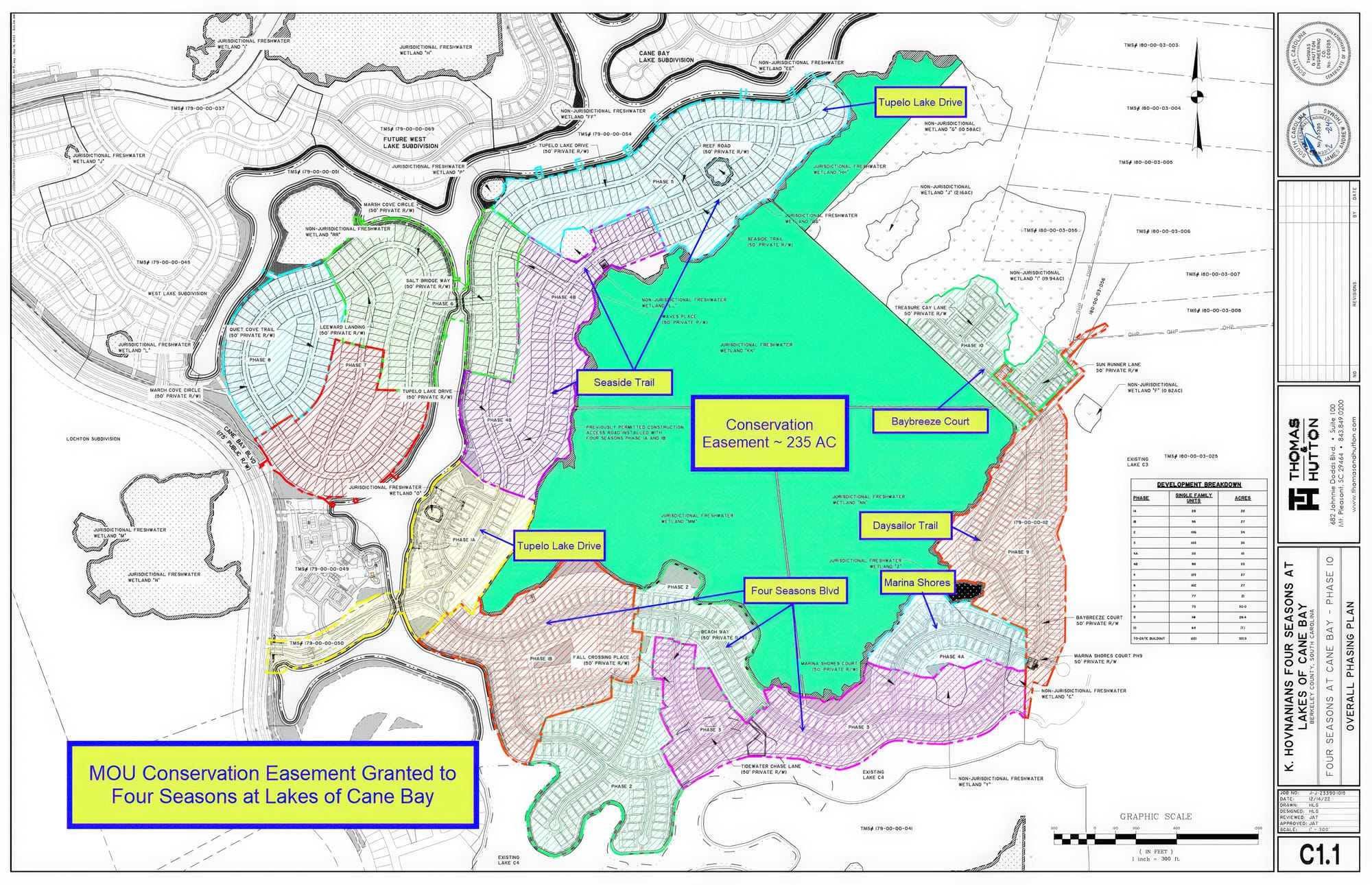
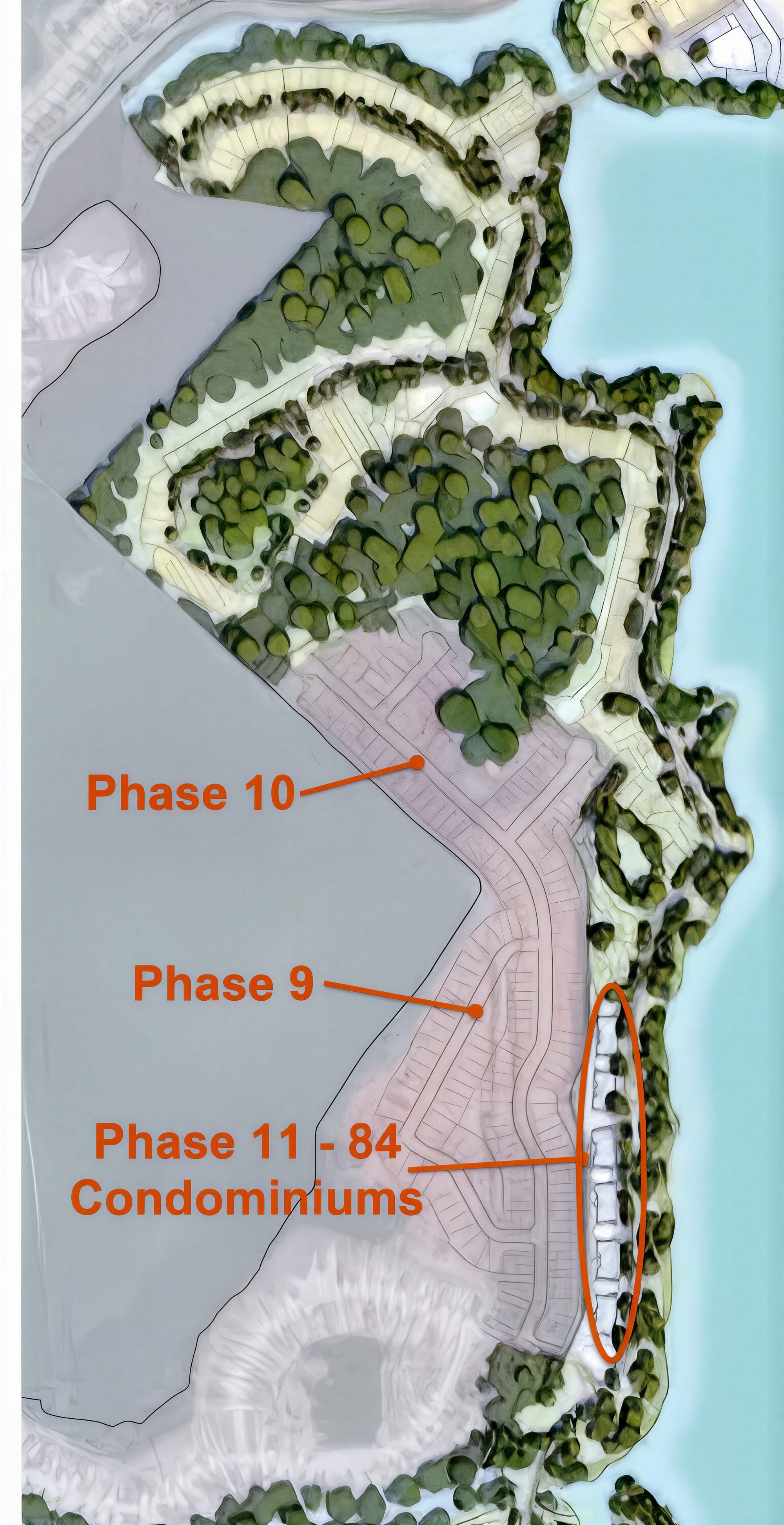
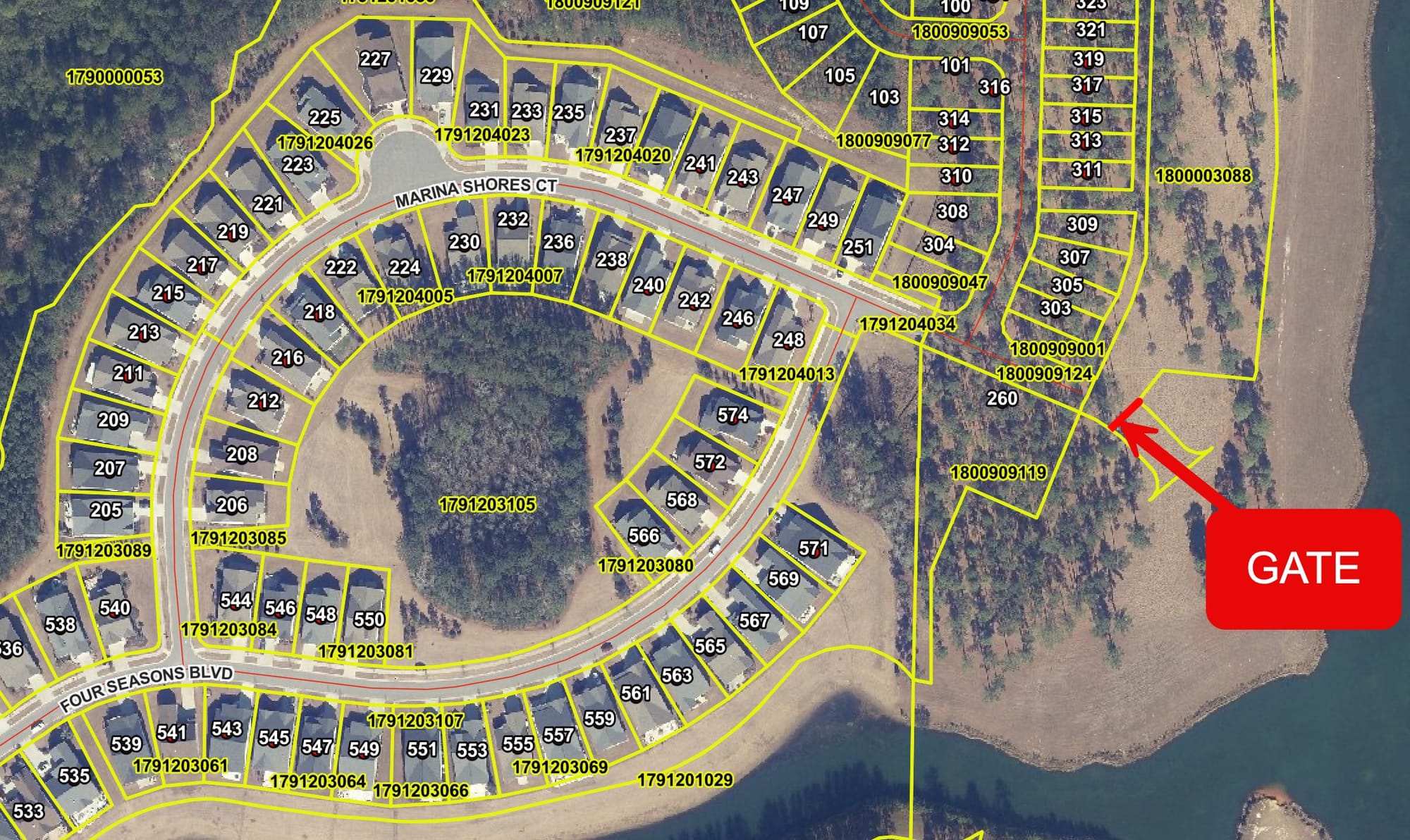
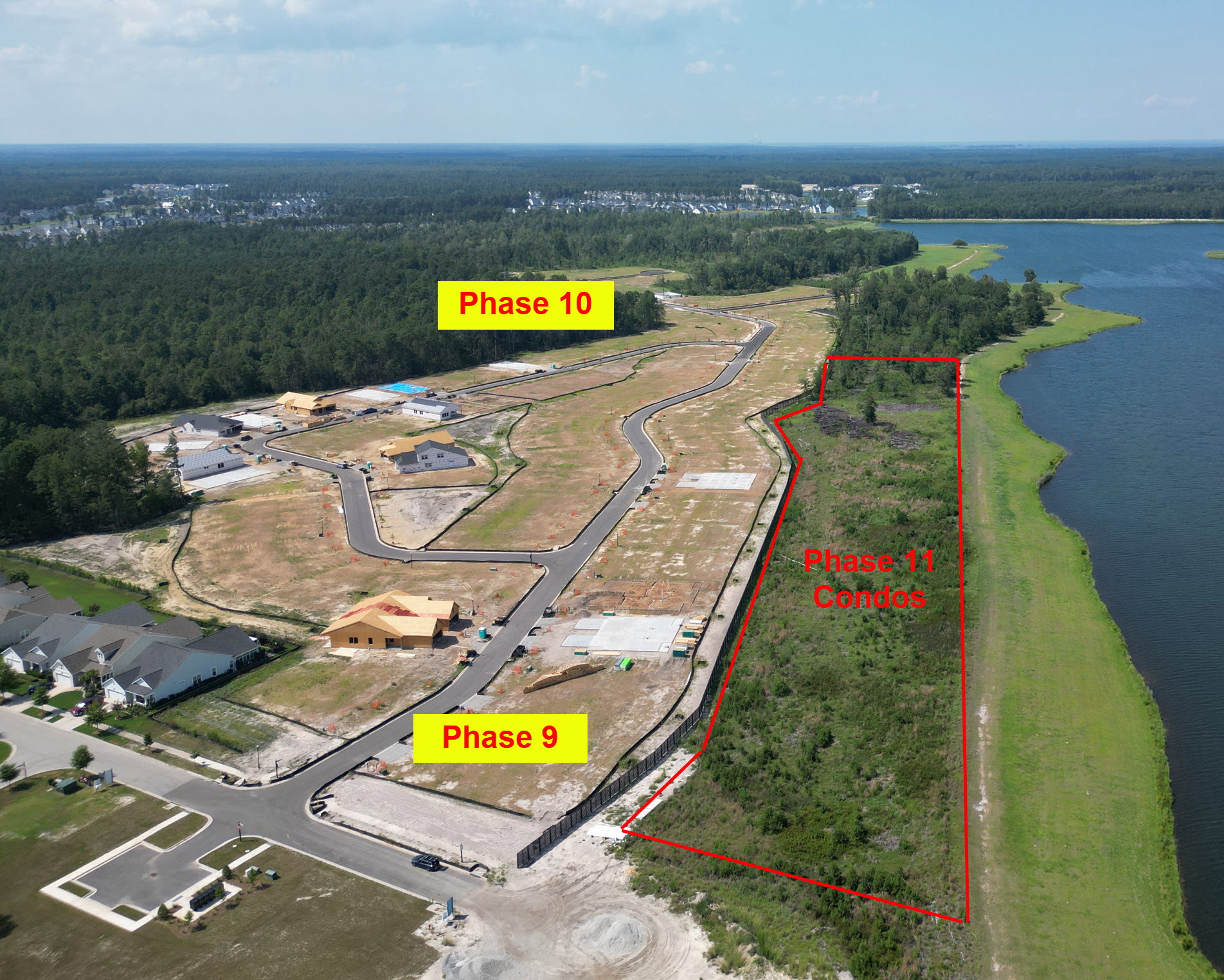
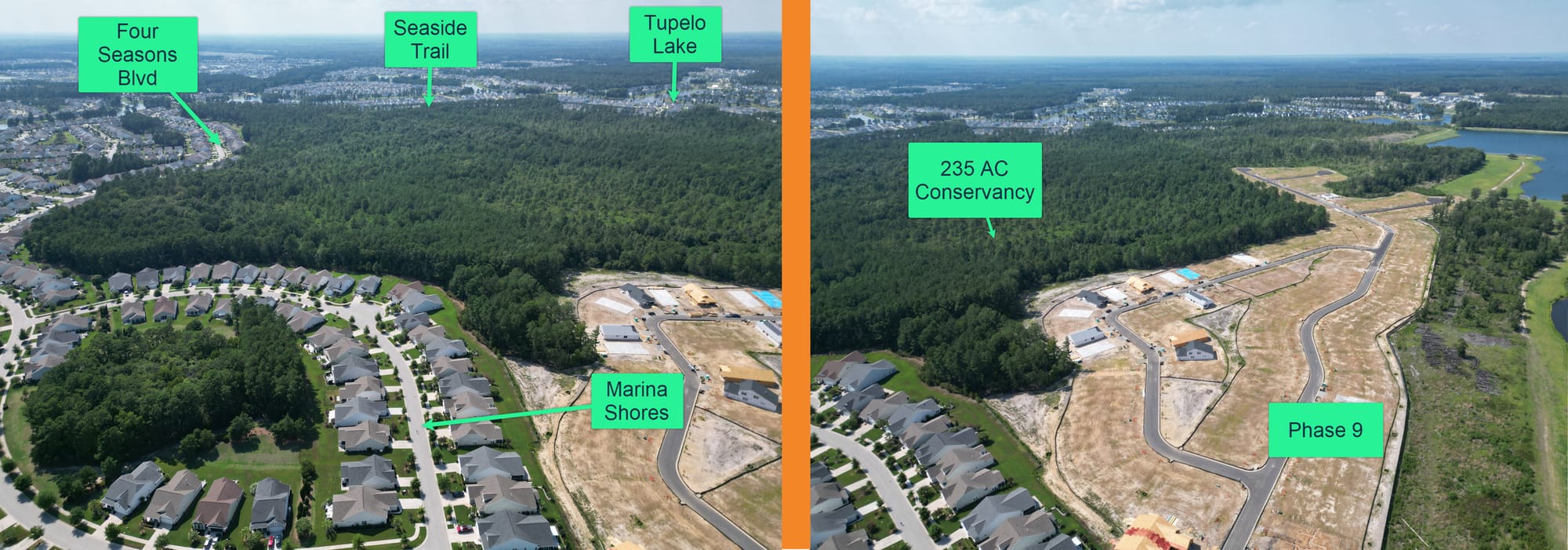
 L3      Regarding Phases 9 &10. When will the residents of Marina Shores Court, directly affected by the build-out of phase 9, see the buffer between their homes and the new homes being built? For 2+ years, we have been told not to worry, we're gonna love it. "It's in the county's hands," when, in fact, no plans have been submitted to the county by the developer. Planting a buffer has nothing to do with building new homes, repairing roads torn up by construction, drainage, or sewer issues. We could have had two years of growth had the planting been addressed after the storm drain installation was complete. What will be planted, and when will it start?
 
 STREETS
 
S1   I am concerned with the unseen and long-term impacts the construction traffic is having on the infrastructure of Four Seasons. By infrastructure, I refer to the streets, specifically Four Seasons Blvd., the bridge over the lake, and the roundabout, as well as the conduit for sewer, water, electric, and optic beneath those roads.
When Four Seasons buildout is complete, that infrastructure becomes the homeowners' association’s responsibility. As the developer is aware, damage from trucks is exponentially greater than from vehicles. According to the Government Accountability Office (GAO), one five-axle tractor-trailer loaded to the 80,000 federal limit has the same impact on roads as 9,600 automobiles. Damage is calculated using the Fourth Power Law.
     The dump trucks traveling along Four Seasons have either three or four axles, depending on the load they are carrying. The damage and wear is essentially invisible now, but is occurring. I would like to know how we can be sure that the roads and infrastructure will be left in excellent condition when Khov leaves. What steps are and will be taken?
 
S2   Additionally, I would like to bring to the board’s attention that the construction traffic leaves rocks and gravel in the roundabout, and on the streets, which is a hazard to bicyclists, motorcyclists and walkers and can cause damage to cars. Who is responsible for cleaning that up, and in what timeframe?
 
OTHER
 
O1  Will the damaged windows (the seals between the glass has failed ) in the Lake House be replaced and will it be through warranties?
 
O2   Can the badly stained carpet in the card room be replaced soon?
 
O3   What has the KHOV HOA done on behalf of homeowners to demand the reopening of the large lake to residents’ traffic?
 
 O4   Can you provide the members with an itemized expense report for all of the repairs and replacements made by KHOV’s HOA that were the result of poorly constructed or missing requirements of the builder within the common areas and amenities?
 
O5   The recent addition of a wooden screening fence along the eastern boundary of phase 9 will require ongoing maintenance. Please indicate how the reserve fund addressed this cost. 
 
O6   As Berkeley County Planning indicated that this was not their requirement, can you explain why this very costly maintenance item was constructed? 
 
O7   Are there plans to add more fencing along the perimeter of phase 10 and other areas to our community? 
 
O8  Was the new fence built on community property or Grambling property?
 
 O9   Why is there a sign as you enter the complex stating that the area is monitored by security cameras when it is not? Only cameras are at the clubhouse.
 
O10 Since anyone can jump the fence at the pool to get in, why is there no security cameras at the outdoor pool? This would also be helpful if someone gets injured out there if someone is alone and has a medical emergency. This would also be helpful at the indoor pool and the gym.
 
O11 Who pays for damage caused by construction equipment, such as grassy areas, road signs and potholes that were outside the exit gate near the stop sign?
 
O12 Since Ruppert was awarded the contract to replace sidewalks, do they have a contractor’s license to pour sidewalks? 
 
O13  Can you tell me when the last time all fire hydrants have been inspected and by whom? How often are they required to be inspected?
 
O14   Could the HOA assess the exiting of the area at Cane Bay Blvd by vehicles? Given the abundance of foot, skate board, golf cart, bicycles etc. traffic using the path, the obstruction of view along with the increased traffic from three directions makes for an unsafe situation for someone. I for one do not want some nine year old cruising on their bike along the path slamming into the side of my car. Or worse.

Questions Submitted to Jan 2026 Board Meeting image
Questions & Answers Submitted to the 2025 Annual Meeting

Note: follow up questions are in parenthesis
 
Q: Why is the common area irrigation not on rain sensors?

A: This is an option that can be considered, but our contract with the landscape maintenance company monitors and will shut off when not needed. They are currently on a timer.

(A bigger question is what is the plan to reinvigorate this poorly operating system community wide? Interviews with Ruppert personnel indicates serious concerns over the viability of the current system.)
 
Q: The front entrance fountains need to be improved; we need to ask Del Webb for the manufacturer and set up for their fountains as I have not seen them not operating.

A: The front entrance fountains are working properly. The fountains at Del Webb, as all fountains do, go down periodically as well, and the fountains at our entrance were recommended by two individual pond/lake fountain companies. The fountain on the entrance side goes down more frequently because it is at the shallow end of the lake, and debris gets sucked up into the pump which causes it to clog and shut down.

(Could you share the current maintenance schedule that is in place for these fountains?)
 
Q: The street trees are in terrible condition, and the pine straw is ugly around them. What happens if residents don’t have pine straw around the house currently? The landscaping needs to be per home and then the common areas separately for homes that opt out of these services.

A: The majority of the street trees are in good health Periodic assessments by the management team are made and those that are verified as dead will be removed until the next round of replacements is planned. The pine straw at homes and in the common areas is replenished once per year. This is done in the spring. Homeowners may submit an architectural application for approval should they prefer to replace the pine straw in their beds with mulch. This will be a homeowner expense. Street trees will not be allowed to be changed to mulch as they are important to the overall character of the community.

(conflicting answers are highlighted, please clarify)
 
Q: Who is responsible for the maintenance contracts for the retention basin system?

A: The stormwater system internal to the community is the responsibility of the Four Seasons at the Lakes of Cane Bay HOA. The greater lake system surrounding the property is monitored and maintained at the direction of the Lakes of Cane Bay HOA or county, whichever has accepted conveyance.

(Clarify as to who has accepted conveyance in either case. Is it the County or LOCB?)
 
Q: Who is responsible for paying for the path to be installed from Marsh Cove Circle to the pool area?

A: The builder, K. Hovnanian Homes has committed to installing the proposed pathway and will pay for this unbudgeted expense through subsidy funding of the Operating account. All future maintenance will be provided by the HOA.
(Clarify if member fees were used to pay for this feature and if the pathway was part of the County approved plans)
 
Q: The small evergreen bushes in between the cabana and the children’s pool are almost dead. Will these be replaced? These bushes don’t seem to be properly watered. Why isn’t there some type of volunteer group here to help with some of the things that the membership can do?

A: Ruppert Landscaping maintains the vegetation surrounding the Lakehouse under a contract with the HOA. Any dead plant material will be removed. The planting beds are irrigated by a drip line system. The resident driven Landscape Committee will make recommendations for future replacement needed.

(In conversation with members of the Landscaping Committee, they have been told consistently that there is no money budgeted to replace dead or removed plantings throughout the community.
What is the status of these plantings?
Is there a plan to replace the two dead palm trees at Salt Bridge?)
 
Q: What can we do in advance this year to make sure the irrigation at the back end of Four Seasons Boulevard/Waterside will work this year? We went the entire summer without watering last year; updates given were never accurate or delivered on. One worker claimed the new construction owners asked them to keep it off, then we were told it was needing parts etc. Regardless, they were reported to be fixed the same week they were being shut down for the season, so we never saw them working. Can we make sure they are indeed functional on Day 1 this year?

A: Ruppert has begun running through the common area irrigation system and making any needed repairs to ensure functionality in the Spring.

(Please confirm that as of today, all systems are fully functional including drip lines?)
 
Q: When was the last time fire hydrants were inspected?

A: They were inspected in 2021 and are on a rolling schedule as required by the local authority having jurisdiction. If a hydrant is ever leaking or damaged it should be reported and it will be repaired by Berkeley County Water& Sanitation (BCWS).

(When do you expect to replace all missing road reflector identifiers which indicate the locations of fire hydrants?)
 
 Q: Will the parking areas be remeasured and if they measure 8,900 Square Yards, would the inflation adjusted expenditures in the projection for year 2037 be increased by $28,151?

A: This will be a determination made by the Engineer while performing an updated study. The current study and funding recommendations have been accepted by the Board of Directors following review and approval by the Finance Committee.

(If there is an error in the RA assessment, why not correct that now rather than waiting years to do so?  Who on the board of directors and finance committees has the specific knowledge and experience to accept the RA conclusions as accurate in this case?  An issue has been raised by the Association membership requesting a review. Please explain why that should not be performed.)
 
Q: Will the reserves be adjusted to recognize the periodic repair of the Parking Areas which weren’t included in the Reserve Study?

A: The parking lot milling and overlay of the asphalt was included in the Reserve Study.

(This question remains unanswered as it appears that not all areas were included. When will this assessment be added for budgetary consideration?)
 
Q: We noted that the new reserve study took the reserve position in multiple instances to perform the repairs or replacement of line items in a phased approach. We applaud this
approach as it recognizes that not all elements need to be repaired/replaced at the same time. The reserve study did not include any reserve elements for cleaning and repair maintenance of the 44-storm water drains and pipework emptying into the retention basin (from the storm drain through to the retention pond system). We believe that this line item should be reflected in the projection of expenditures as they get worse over time and need property management attention and visibility to the Homeowners and reflect a potential safety issue if not addressed.

A: The drainage system on Association property is a part of the Road/Stormwater Reserves and any expenses would come from the Reserve fund as per the Reserve Study for Road/Stormwater. Reserve Advisors recommends the Association budget for interim cleanings through the operating budget. Future Reserve Studies will continue to monitor the need for storm water system cleanings to become a reserve item or remain as a periodic operating expense.

(Has there been a survey done of both collection and discharge appurtenances within stormwater conveyance system? The presence of slow release at numerous stormwater collection points would indicate that significant siltation is present either within the system or where is discharges into the retention basin.)
 
Q: Like other capital asset repairs/maintenance > $10,000 per occurrence over the 30-year
period of the reserve study, when will reserves be adjusted to reflect an estimate for the repairs and maintenance of the 44-storm water pipework and discharge points emptying into the retention basin system?

A: An updated study is planned to be completed every two years in an attempt to stay current with cost increases. The engineer will determine at that time, if any funding adjustments are needed on all items currently in the study.

(This answer does not address the current issues with both collection and discharge within the community system. Please indicate when such a survey will be conducted.)

Q: We noted the Reserve Study’s recommended reserves required for sediment removal for the pond in front of the entrance. For future dredge work required in the more expansive Four Season’s section of the retention pond (from the bank perimeter of waterways touching the Four Season’s land and inwards towards the opposite bank), which Association is responsible and legally accountable for the repair?

A: The Lakes of Cane Bay HOA or the ownership entity of improved property is responsible for any monitoring, maintenance, or dredging deemed necessary. Four Seasons at Lakes of Cane Bay does not own or maintain the lake system.

(What communications have been conveyed to the entity responsible for such maintenance? Are there any required maintenance agreements codified in the Berkeley County registrar’s office and attached to the common area land use?)
 
Q. Is there a reserve study for the dredge work?

A: This information would be included in a Reserve Study performed for the Lakes of Cane Bay, not Four Seasons at Lakes of Cane Bay, as it is not owned by Four Seasons at Lakes of Cane Bay.

(Has the KHOV HOA contacted LOCB HOA to request dredging at any of the current 52 stormwater discharge points?)
 
Q: The General Reserve Expenditures for Lakehouse Windows and Doors lists 2056 as the Estimated year for replacement or a 38-year useful life or no expenditures during the 30-year
life of the Reserve Study. The 2019 Reserve Study used a 20-year life for these assets. How was the 38-year useful life determined?

A: The consulting Engineer makes that determination based on his research, experience, and examination of assets utilizing standards accepted in the industry.

(The current replacement of 23 windows with failed seals seems to portend a lack of future acceptable performance of the installed window products. This is borne out by the residents’ experience with the same manufacturer’s products within their own homes. Will KHOV’s HOA consider a more realistic approach to the current 38-year useful life prediction made by RA and adjust the reserve balance requirements accordingly? Also, as each replacement made under the warranty bears significant expense, is it prudent to continue to replace a proven substandard performing product such as the failed windows with the same manufacturer’smaterials?)
 
Q: Will the Reserve Study be adjusted to use the 20-year useful life established and accepted in the 2019 reserve study which would increase the reserves in inflation adjusted
expenditures by $430,573?

A: The current study will not be adjusted to reflect the 2019 study estimates. The purpose of obtaining a new study is to obtain updated information on each asset. If adjustments to useful life and funding are needed, they will be made in the next study.

(It appears that in some cases the discrepancies between these two reserve study assessments are significant. Simply stating that the function of a new study is to update the information from one to another does not address why there are such dramatic deviancies. Can you please give us a better explanation for such offsets? Without some logical understanding of this practice, it brings into question the dramatic increases of useful life by your new reserve study firm in a number of other areas.)

Q: The General Reserve Expenditures uses 400 SQUARES for roof replacement of the Lake House and Pavilions. The 2019 Reserve Study used 495 SQUARES (an increase of 19%) for roof replacements which appear to be a more specific and accurate number. Will the roof be
remeasured and if the 495 Squares measurement is correct, would the
inflation adjusted expenditures in the projection be increased by $58,253?

A: The current study will not be adjusted to reflect the 2019 study estimates. The purpose of obtaining a new study is to obtain updated information on each asset. Both reserve consultant specialists provided an estimate based on their inspection of the roof at that point in time. If adjustments to useful life and funding are needed, they will be made in the next study.

(The roof inspection done by RA was inadequate to assess the roof conditions as it was done from the ground. There was a recommendation that a qualified roofing inspector be hired to conduct regular inspections to ascertain an accurate assessment of the amenity roofs. Has that been done and what is the plan to do so moving forward?)
 
Q: Pool Finishes, Plaster and Tile Page 4.61, Line Items 6.800, 6.801, 7.800 and 7.801.  There are no funds set aside for partial replacements of the scuppers and coping as needed, replacement of tiles as needed, replacement of joint sealants as needed, or concrete structure repairs as needed.

A: The replacement of the pool deck will include the coping and scuppers. Re-plastering the pool will require new tiles and is included in that replacement line.

(It appears that some of this work will be undertaken prior to the useful life projected by RA in its reserve study. Can you provide any other examples of where the useful life is not anticipated to follow the RA recommendations?)
 
Q: Furnishings, Page 4.14, Line Item 2.450.
Components such as televisions and other frequently used items typically have a useful life shorter than 20 years. Additionally, these original furnishings were intended for use by fewer residents. The current expansion in Phases 9 and 10 will increase their usage by an additional 20%. Can you better define individual useful life of various classifications of components rather than the broad general grouping presented by RA of the entire category?

A: Replacement TV, Keurig machines, etc. do not meet the criteria of a capital expense or Reserve item. Given the general low value, they are considered operating expenses.

(I believe this question has considerable merit and was not solely in reference to those expendables covered within the category of general expenses. The 20% increase in users as the result of unplanned expansion of phases 9 and 10 on roadways, amenities and other common area components becomes a significant concern and is the real issue. The extreme overloading of a 2 ½” thick roadways never intended to handle the extraordinarily heavy construction traffic promulgated by the unplanned expansion into Phases 9 and 10 needs to be considered when useful life is being determined. There is no evidence that this was even discussed with RA. Please explain how this concern will be addressed.)
 
 Q: Exterior Building Elements: Gutters and Downspouts, Aluminum Page 4.1, Line Item 1.240. RA recommended semi-annual maintenance. Will the gutters be inspected and maintained per the Reserve Study?

A: This is their recommendation only. The gutters were inspected and cleaned in 2024 and will continue to be maintained to ensure useful life expectancy.

(The answer suggests that RA’s recommendations were just that and KHOV’s HOA does not consider them binding thus putting the value and purpose of entire study at question. What’s the purpose in even doing a reserve study if KHOV’s HOA has decided to pick and choose their consultants’ recommendations?)
 
Q: Are these services currently being performed by certified maintenance personnel as noted on Page 4.2. If not, when can we expect this to be accomplished?

A: A professional gutter contractor was hired.

(Can you provide the date and a copy of the written report provided by the professional gutter contractor?)
 
Q: Asphaltic shingled roofs Page 4.3, Line Item 1.280. RA conducted limited ground observations and recommended that the Association “maintain a service and inspection contract with a qualified professional and record all documentation of repairs conducted.” When will a contract be drawn up for the recommended services?

A: There are no plans to enter a contract with any vendor at this time. As is common, the roof was inspected, and repairs were made in 2023 by a licensed contractor.

(Can you provide clarification by what is meant by “as is common”? Can you provide the date and written report provided by the qualified professional roofing contractor? Repairs were observed by the IATeam during 2025, can you provide a summary of the work that was done at the time and a statement as to whether all areas were inspected and subsequent recommendations were carried out?)
 
Q: Has there ever been assessments of the amenity roofs conducted by a certified roofing inspector?

A: Yes. See above Q & A.

(Can you provide a copy of the report done by the certified roofing inspector?)
 
Q: c. Walls, Siding, Fiber Cement Page 4.7, Line Item 1.840
“We note the following select recommended preventive maintenance activities to maximize the remaining life: Annual inspections and repair damage, loose boards, and finish stains; periodic pressure cleaning at areas with organic growth; touch-up paint and finish applications as
needed and sealing of filed cut end joints.” Are annual inspections currently being performed by a qualified firm as recommended by RA which has resulted in making some of the necessary repair work?

A: The two on-site maintenance technicians can assess and making minor routine repairs to any loose boards or finishes. They have a schedule for pressure washing and following the purchase of a pressure washer, are now able to routinely clean the amenities and walkways, saving the Association money while receiving more frequent/quality service. If major repairs are needed, Management will go out to bid for work.

(Can you provide a copy of the maintenance personnels’ resumes including any professional training, accreditations or associations which they currently hold.)
 
Q: Will the reserve be adjusted to use the higher repair value established in the 2019 Reserve Study and alsouse a more realistic next repair date before 2028 whichwould increase the reserves in inflation adjusted expenditures by $59,434.

A: The current study will not be adjusted to reflect the 2019 study estimates. The purpose of obtaining a new study is to obtain updated information on each asset. If adjustments to useful life and funding are needed, they will be made in the next study.

(While we do recognize that the new reserve study intended to update the long overdue adjustments needed to make the reserve fund credible, it does appear that there are numerous issues that bring the current study into question. We have expressed them through our questions herein. The biggest concern lies in the dramatic adjustments to useful lifein areas such as the roadways, sidewalks, windows, bridges, landscaping and irrigation. In conversations with the Community Manager, it was suggested that a number of estimates for useful life would need to be adjusted as it is apparent that those estimates were proving to be wanting in their predicted performance characteristics. In lieu of this information, have there been specific areas that fall into that realm, and if so, what impact will they have on the total reserve funds? It also appears that the new RA study seemed to neglect the fact that many of the components considered have already been in operation for years prior and seemed to take an approach that visual inspections took precedence over actual service. As these various components begin to fail much sooner than their negotiated predictions, will there be adjustments made to the reserve fund to offset this reality?)
 
Q: The General Reserve Expenditures for Pickleball Surface Replacement assumed a
replacement in 2053 using a 35-year life. The 2019 Reserve Study used a useful 20-year life. The periodic repair/Color Coat for the Pickleball courts assumed a 5-year useful life with the first repair assumed in 2028 at a cost of $1 per Square Foot or $7,100. Ironically, the new study assumed the 2028 next repair because it incorrectly assumed that a repair was performed in 2023 (5 years past the 2018 Base Year installation). The 2019 Reserve Study assumed a 5-year useful life with a cost of $1.62 per Square Foot or $11,500. It should be noted that our courts are utilized on a much more frequent basis than similar public courts. Will the Reserve Study be adjusted to use the2019 Reserve Study that projected a more realistic useful life of 20 years which would project a repaving in 2038 and would reduce the reserves in inflation adjusted expenditures by$139,709?

A: The pickle ball courts are currently in good condition and will be resurfaced/repaired when needed, even if prior to the projected date in the Reserve Study. The current study will not be adjusted to reflect the 2019 study estimates. The purpose of obtaining a new study is to obtain updated information on each asset. If adjustments to useful life and funding are needed, they will be made in the next study.

(The IATeam sent KHOV’s HOA board evidence this past summer that repairs were needed. What are the current plans to do so?)

Q: The Reserve Study states for the Streets Cost Center contribution they used budgeted additional reserve contributions of $45,000 in 2024 and $318,000 in 2025 “per information
provided by Management”. How were these numbers calculated and by whom? Was the 2024 additional reserve contribution of $45,000 funded (if not, who will fund and when will they fund it)? Who will fund the additional reserve contribution of $318,000 in 2025 as it was not included in the 2025 Operating Budget?

A: These numbers were provided to Reserve Advisors by Management as part of the Developer contribution and Reserve Advisors calculated the totals.

(Please respond to the specific questions presented in the above. The questions requiring clarifications have been highlighted for your convenience)
 
Q: Why is the Reserve Study starting reserves balance as of 8/31/24 of $2,105,392 ($1,170,499 General plus $934,893 Streets) higher than the Total Reserve Funds on the 8/31/24 Balance Sheet of $1,561,458? Who will fund the $543,934 starting balance deficit and when will they fund it?

A: The starting balance in the reserve study reflects additional reserve contributions budgeted and expected by the end of the year and includes the cumulative reserve interest on
investments earned to date. Clarifications from the reserve consultant are forthcoming and will be communicated once received.

(I don’t believe this information was ever provided. Please remit)
 
Q: We were told in response to a homeowner question on the 2025 budget that the $296,800 reserve contribution is due to the recommendation per the new Reserve Study. The Reserve Study states their recommended reserve contributions were calculated beginning in 2026, and for the 2025 General Cost Center contribution they used the budgeted reserve contribution.
How was the $296,800 calculated and by whom?

A: These figures were calculated by Reserve Advisors. The initial study and funding plan provided a 2025 recommendation, which was incorporated into the plan. Clarifications from the reserve consultant are forthcoming and will be communicated once received.

(I don’t believe this information was ever provided. Please remit)
 
Q: The Asphalt Repaving in the Streets Reserve Expenditure Projection uses a Total Quantity of 8,000 Square Yards for the Parking Areas in Four Seasons. The 2019 Reserve Study used 8,900 Square Yards for the Parking Areas. Will the parking areas be remeasured and if they measure 8,900 Square Yards, would the inflation adjusted expenditures in the projection be increased by
$28,151?

A: The parking lot will be measured by the contractors when submitting bids to perform work. The estimated expense of repaving is not an absolute cost and will clearly vary depending on timing and the accepted contract. There is no need for the 2024 study to be changed. Any needed adjustments can and will be made in the next study. The Road Reserves are properly funded and in compliance with all county requirements.  

(The matter of two differing assessments of the amount of asphalt paving suggests that one estimate is in error. The difference is significant such that it would be responsible for the board to have correct information which will have an impact on the reserve fund. Getting an accurate assessment is not difficult and can be provided by the inspection of the construction documents. Can you please provide an accurate assessment of the parking lot areas subject to maintenance and repair? Despite a statement that RA had access to the construction documents for their study, it did not indicate whether they took copies of these documents or even used them to draw their conclusions. Please provide a statement from RA that they actually used the construction documents when producing their cost estimates)
 
Q: What was the replacement cost and estimated useful life recommended in the new reserve study for the Replacement of the subsurface irrigation. If greater than$10,000, why was this line item deleted from the list ofexpenditures.

A: There were no lines omitted from the study. Repairs are made as needed and both the 2019 and 2024 study provide for partial replacement and repairs. Neither recommended a full replacement at one time.

(Can you indicate the extent of the aforementioned replacement and repairs? As there is a real concern about the documented failures of our irrigation systems, it would be useful for the homeowners to provide their real experiences with the system to a responsible party for its consideration.)
 
Q: The General Reserve Expenditures for Replacement of Lakehouse Furnishings on a phased approach assuming a useful life of up to 20 years with years remaining of 8 to 18 years. The projections assumed a full replacement of furnishings in two phases with ½ in 2032 and ½ in 2042. Basically, this represents a 20-year full replacement schedule. The 2019 Reserve Study used a 5-year Useful life and assume full replacement every 5 years. It should be noted that the wearand tear on furnishings will accelerate due to +20% increase inhomeowners from Phase 9 & 10 development which was not anticipated in the 2019 Reserve Study. Will the Reserve Study be adjusted to use the 2019 Reserve Study 5-year useful life while considering the 20% Homeowner population increase with Phase 9 & 10 which would have a significant impact in inflation adjusted expenditures by $393,926?

A: The current study will not be adjusted to reflect the 2019 study estimates. The purpose of obtaining a new study is to obtain updated information on each asset. If adjustments to useful life and funding are needed, they will be made in the next study. Should furniture replacement be needed prior to the estimated date of replacement, it will be replaced.

(This standard answer seems to not reflect a real concern over the performance of specific appurtenances. Instead of repeating this statement in the interest of expediency, could we take each measure on its merit rather than dismissing it out of hand? The members have expressed a real concern for the negotiated aspects of certain useful life categories. The dramatic discrepancies between the two studies in obvious and concerning. Something is wrong and it would help build some confidence in the RA study to have an honest review of its contents and conclusions . Would KHOV’s HOA board consider setting up a review with the authors of their reserve study to see if its members can get its concerns addressed?)

Q: The General Reserve Expenditures for the indoor pool’s Mechanical Equipment Dehumidification Unit assumed a replacement cost of $105,000. The 2019 Reserve Study used a replacement cost of $185,000. Will the reserve be adjusted to use the 2019 Reserve Study cost of $185,000 which would increase the reserves in inflation adjusted expenditures by $290,842.

A: The current study will not be adjusted to reflect the 2019 study estimates. The purpose of obtaining a new study is to obtain updated information on each asset. If adjustments to useful
life and funding are needed, they will be made in the next study.(see above)
 
Q: There exists some confusion when Reserve Advisors (RA) speaks to the useful life of a system or individual components. The following questions should resolve that confusion. Question: Did RA use the actual dates that these various systems or components went into service?

A: Yes, the actual in-service dates were provided and used by the reserve consultant.

(Can you provide a copy of the service dates supplied to RA?)
 
Q: Were any maintenance records shared with RA during their survey?
A: Yes, any requested records were shared.

(We have no indication of what maintenance records or schedules were shared with RA during their assessment. Would KHOV’s HOA board be willing to allow the examination of these records and schedules to instill confidence in both the RA study and ongoing efforts to properly maintain our community?)
 
Q: Did RA have access to all construction documents during their engagement?
The terms, “good,” “fair,” or “satisfactory” are not defined.

A: Yes, they did have access. The terms are based on Community Association Institute standards. Their definitions are noted below.
“Excellent” – Component or system is in brand new condition.
“Good” – Component or system is sound and performing its function, although it may show signs of normal wear and tear. Some minor rehabilitation work may be required.
“Fair” – Component or system approaching the end of expected performance. Repair or replacement is suggested to prevent further deterioration or to prolong expected life.
“Satisfactory” – A component or system is of a capacity that is defined as enough for what is required, sufficient, suitable and/or Conforms to standard construction practices.

(We understand that RA was given access to construction documents, the question remains did they only review these documents while on site or were they given copies to allow a more scrutinized assessment of the community? It has been noted in previous questions that certain assessments likely failed to accurately consider the as-built nature of the reviewed appurtenances.)
 
Q: Can you provide an acceptable definition of these terms as they represent a specific determination of current component or system conditions? Reserve Advisors accepted the following categories as “reported satisfactory” which were made by the Association.
a. Air Handling System and Condensing Units, Split Systems, Page 4.19, Line Item 3.070
b. Life Safety Systems, Page 4.20, Line Items 3.555 and 3.580
c. Security System, Page 4.22, Line Item 3.820
d. Gate Entry System, Page 4.35, Line Item 4.310
e. Gates and Operators, Page 4.36, Line Items 4.320 and 4.330
f. Irrigation System, Page 4.38, Line Item 4.420
g. Lift Station, Page 4.39, Line Items 4.540 and 4.550
h. Pond and Aerator, Page 4.44, Line item 4.700 (No mentionof the South Entrance Aerator or management of existing shoreline throughout the community)
i. Mechanical System, Page 4.58, Line Item 6.600
j. Mechanical Equipment, Dehumidification Unit, Page 4.59, Line Item 7.598
Question: Who made these “reported satisfactory” assessments on behalf of the Association
and can you provide their professional qualifications?

A: A professional engineer who specialized in Association Reserve Studies made the determination based on his experience, credentials, and inspection of the assets.

(Furtherclarification is needed. Please provide the credentials of the PE who made these determinations)
 
Q: Excluded Components: There are inquiries regarding the categorization of certain components. Specifically, Pool Deck and Structure, Windows and Doors, Building Environmental Air, Energy Management Systems, and Common Area Irrigation Systems and Controls that may potentially fall under expenditures applicable to the Reserve Fund under certain circumstances. For instance, windows and doors have been assigned a forty-year useful life; however, there is evidence suggesting that many windows have already started to fail due to compromised seals. The Giles Flythe Study assigned a more typical twenty-year useful life, better aligning with the quality of the windows used. Why did RA double the useful life of the window components from the Giles/ Flythe 2019 Reserve Study especially with clear evidence of early failures?

A: It was Reserve Advisors professional opinion based on their survey of the windows. The projected useful life of assets is an estimate and will not be exact. Some assets will fail prior to the expected replacement date, while others will last much longer. Some windows in the pool room have already been replaced. Assets that need to be replaced prior to the projected date will be replaced and numbers will be adjusted in the subsequent Reserve Study.

(In the face of windows that have a ten-year warranty which continue to fail, it would seem that a 40-year useful life with these substandard quality products that perhaps the Giles report would be closer to reality. I appreciate the standard answer repeated throughout our inquiries, but it sees disingenuous to ignore reality. Would KHOV’s HOA board consider a reassessment of some of the more obvious shortfalls on the RA study?
 
Q: The Pool deck was assigned a useful life of 60 years or more by RA. However, ACI 365.1R-2 defines three conditions for evaluating concrete’s useful life. Condition #1 describes the technical service life as the period until an unacceptable state, like spalling, safety issues, or element failure, is reached. Factors affecting useful life include improper compaction (causing cracks - now evident), concrete mix design, type of concrete reinforcement, the weather, time, temperature when the pour was made, and the addition of excessive amounts of water during on site mixing to ease the pour itself. Excessive spalling and frequent cracks are significant reasons to replace pool decks as they occur. Would it not be prudent to reduce the RA assessment more in line with the potential for some of the issues identified in the ACI concerns?

A: Reserve Advisors are certified, licensed Engineers and the study reflects their expert opinion. The study was reviewed by both the Finance Committee and the Board of Directors. We did not dictate to Reserve Advisors how to estimate useful life or funding, as it is an unbiased study by an unbiased, independent reserve specialist.

(Does your answer above suggest that the American Concrete Institute’s recommendations were not a valid reason for concern over the unbiased opinions of the PE? The opinions of the unbiased Finance Committee and Board of Directors, who may not have the experience to make such a determination begs the question as to the relevancy of such opinions. We would appreciate any supporting documents that opine the study conducted on these areas of concern.)
 
Q. Exterior Building Elements:
a. Gutters and Downspouts, Aluminum Page 4.1, Line Item 1.240. RA recommended semi-annual maintenance.
Are these services currently being performed by certified maintenance personnel as noted on Page 4.2. If not, when can we expect this to be accomplished?

A: The gutters and downspouts were inspected and cleaned by a professional outside contractor in early 2024.

(As it becomes more evident that Associa is utilizing in house personnel to conduct these inspections, please provide evidence that your maintenance personnel are qualified to do so.)
 
Q: b. Asphaltic shingled roofs Page 4.3, Line Item 1.280.
RA conducted limited ground observations and recommended that the Association “maintain a service and inspection contract with a qualified professionals and record all documentation of repairs conducted.” Question: When will a contract be executed for the recommended services?

A: The Lakehouse roof was inspected in October 2023. All damaged shingles were replaced.

(Can you provide the inspection report done over two years ago and the credentials of the qualified professionals used?)
 
Q: In addition, the community has witnessed numerous roof failures with their home installations ranging from leaks to warranty voiding shingle placement. These leading indicators suggest that the potential for the same issues may be present within our amenity structures. Has there ever been assessments of the amenity roofs conducted by a certified roofing inspector?

A: Yes

(Please provide evidence as requested above)
 
 Q: c. Walls, Siding, Fiber Cement Page 4.7, Line Item 1.840
“We note the following select recommended preventive maintenance activities to maximize the remaining life: Annual inspections and repair damage, loose boards, and finish stains; periodic pressure cleaning at areas with organic growth; touch-up paint and finish applications as needed and sealing of filed cut end joints.” Are annual inspections currently being performed by a qualified firm as recommended by RA which has resulted in making some of the necessary repair work?

A: The interior and exterior of the Lakehouse and surrounding amenities are inspected regularly by our Maintenance Technicians and Manager.  Preventative maintenance is performed by both our maintenance technicians and contracted maintenance contractors. Any minor repairs or touch ups are performed inhouse. All other projects are put out to bid and work is performed by licensed contractors.

(Please provide the resumes of our Maintenance Technician and Manager.)
 
Q: 2. Building Services Elements: a. Air Handling and Condensing Units, Split Systems Page 4.19, Line Item 3.070. Was the reporting of the Air Handling and Condensing Units as
“satisfactory without operational deficiencies” an accurate assessment considering these units repair history?

A: Our HVAC system is in satisfactory condition and running well. Our HVAC contractor performs quarterly inspections of the units and there is no reason to expect premature failure.

(Can you provide the quarterly reports for each of the above-mentioned systems)
 
Q: Did the Association share any service or maintenance files with RA regarding these units and systems?

A: All questions asked by the Engineer, regarding equipment and the amenities were answered, and all documentation requested was provided.

(Can you confirm that service and or maintenance files were requested by and/ or shared with the PE conducting the reserve study?)
 
Q: Are there service and maintenance contracts currently in place with a qualified firm to
maintain these systems as per the manufacturer’srecommendations?

A:  Yes, routine maintenance contracts are in place for majorsystems.

(Please identify those major systems currently under maintenance contracts.)
 
Q: b. Life Safety Systems Page 4.20, Line Items 3.555 and 3.580. Is there a manufacturer’s maintenance plan under contract with a qualified and licensed professional as recommended by RA for the Life Safety System? “We recommend the Association obtain and adhere to the manufacturer’s recommended maintenance plan. In accordance with NFPA 72 (National Fire Alarm and Signaling Code) we also recommend the Association maintain a maintenance contract with a qualified professional.” c. Security System Page 4.22, Line Item 3.820
Question: Is there a manufacturer’s recommended maintenance plan in effect for the Security
System?

A: Yes. We have a contract with Sonitrol, and all fire and safety systems are inspected and maintained by Pye-Barker and Sonitrol.

(How often are these systems inspected and are their reports shared with Berkeley County and KHOV’s insurance underwriter?)
 
Q: Who from the Association judged that these systems determined as “reported satisfactory”
condition?

A: The Reserve Study Specialist determined the cameras to be satisfactory. We also have a contract with a security company that monitors the cameras, adjusts as needed and makes repairs.

(What areas are currently covered under these camera systems? When you say that a security company monitors these cameras, does that include 24/7 live monitoring or only providing a recorded video saved to its servers after one is requested?)
 
Q: d. Asphalt Pavement, Repaving, Streets Page 4.23, Line Items 4.020 through 4.025 There is an ongoing concern for the constant flow of heavy construction traffic over our community roads, the result of the unplanned development of Phases 9 and 10. There is evidence of advanced deleterious effects on our roadways thus reducing the normal expectation of useful life. Were any of the considerable traffic statistics and their weight characteristics (see below) resulting from the ongoing heavy construction traffic shared with RA?

A: We employed a professional engineering firm that is experienced in calculating expected useful life of the roads as well as all other assets.

(Was this professional engineering firm given the specifics of the hundreds of construction vehicles utilized to raise the sites in Phases 9 and 10 approximately 6’? Many of the trucks weighed in at the State’s maximum allowable weight of 66,000 lbs. The roadway profile of Four Seasons Boulevard indicates that 2.5” of asphalt may not have been sufficient to handle this heavily loaded traffic. The original Phases 1-8 did not anticipate the expansion of 9 and 10 placing these useful life of these roadways in question. Review of typical residential 2.5” profiles suggest that our roadways are likely to have load limits of approximately 20,000 pounds. Did RA take these facts into consideration when making their assessment of our roadways. The in situ condition of our roads suggests that they did not. Please provide an answer to this observation.)
 
Q: Did the Association share the actual constructed road profile and establish load ratings with RA so they could accurately predict the useful life of our road system?

A: The reserve consultant requested and received all documentation pertinent to their assessment. (see above)
 
Q: Were there any discussions during RA’s engagement regarding accelerating repairs on those
roadways most impacted by these additional load bearing activities? Note: Typical loads expected within a residential community:
1) Typical Auto GVW ~ 6,000 lbs.
2) Single Axel Dump Truck GVW ~ 26,000 lbs.
Note: Types of loads witnessed and recorded through constant heavy traffic to fill and stabilize Phase 9 and 10 site development are represented below:
1) Tandem Axel Dump Truck gross weight GVWR ~ 52,000 lbs.
2) Concrete Mixer Truck GVWR~ 70,000 lbs.
3) Concrete Pumper Truck GVWR ~ 72,000 lbs.
4) Tri-Axel Dump Truck GVWR ~ 80,000 lbs.
South Carolina Load Limits are capped at 80,000 lbs. Resource: https://measuringly.com/how- much-does-dump-truck-weigh/. What are the current planned improvements to the roadways that are exhibiting significant wear?

A: There were no discussions regarding accelerating road repairs. The appropriate responsible parties will repair any damage the construction vehicles make, and roads will be resurfaced per the Reserve Study recommendation unless unexpected premature damage occurs.

(This answer suggests  that KHOV’s HOA board is set in their “let’s wait and see” policy which in reality put the financial future of our community at some risk. We would like to have a plan where KHOV makes the commitment to pay for these offsets rather than looking at the members fees to do so. This is the cost of doing business. Please ask KHOV’s HOA to seek this commitment from the builder and indicate to the members an agreement to do so.)
 
Q: Has a survey by a qualified geotechnical engineering firm been conducted to determine the damage caused by this unplanned heavily loaded traffic has done to our community roadways resulting in reduced performance in useful life as determined by RA?

A: As is consistent with all new communities, roads are designed and approved to municipal standards.

(Our roads were not designed to handle the very heavily loaded trucks and other equipment as they traffic over residential roads. Was RA informed of this use prior to writing its reserve study report?)
 
Q: Asphalt Pavement, Repaving, Parking Areas Page 4.27, Line Item 4.040 RA offered comments on the evident deterioration of our parking areas.
What is the plan to repair these areas with the RA recommended milling and overlay method?

A: Management will obtain proposals for parking lot milling and overlay.

(Please indicate that you have done this and share the results of those proposals.)
 
Q: Pond, Sediment Removal and Erosion Control Page 4.45, Line Items 4.710 and 4.730.
As this study omitted any reference to the 4.1 miles of community shoreline owned by Cane Bay Lakes, LLC, the forty-four stormwater discharge points into the greater retention basin, and any specific recommendations for the general upkeep of the shoreline, stormwater system and dredging operations as outlined in detail on Page 4.46, we are left to question the following.
Who is the responsible party to maintain the Cane Bay Lakes, LLC shoreline as similarly recommended in the pond referenced in the RA study Component Detail Notes?

A: The Lakes of Cane Bay POA/HOA or the county, whichever has conveyed the maintenance responsibilities.

(Can you provide evidence that indicates that KHOV’s HOA board has requested remediation of those discharge points currently impacted by the siltation caused by their lack of erosion control during site clearing and construction?)
 
Q: Who is responsible for the maintenance contracts for the retention basin system?

A: The Lakes of Cane Bay POA is responsible for the lake maintenance, and the pond at the front of Four Seasons atLakes of Cane Bay is the responsibility of Four Seasons atLakes of Cane Bay Association. (See above)
 
Q: e. Bridges, Composite Page 4.30, Line Item 4.106 – 4.620
Five Year outlook - Why is there no mention of deck replacement? Both bridges have cracked decks due to heavy construction loads. The reserve study only looked at pedestrian walkway/decking. Question: Why was there no mention of the structure itself (piles, bearings, beams, slope protection, curbing, and decks)?

A: Bridges are considered a long-lived element with a useful life beyond the 30-year analysis. The bridges will be inspected and repaired as needed through the mill and overlay events.

(Aside from RA’s visual inspections performed during their limited onsite review, has there been annual bridge inspections by a qualified and licensed engineering firm which addressesthe current concerns of present conditions of our two bridges?)
 
Q: Bridge decks are comprised of 3" fiber reinforced topping slab, NOT PAVERS! Will the BOD go back to Reserve Advisors to get this corrected and to budget for deck replacement?

A: The bridge was built correctly in accordance with the engineering plans and inspected by a licensed engineering firm. Routine scheduled inspections are also required and have occurred.

(This answer does not address the request for those estimates for budgeted repairs omitted by RA. Can you have this addressed properly and in line with the intent of our observations?)
 
Q: f. Concrete, Flatwork Page 4.31, Line Item 4.125. There are numerous locations throughout the community where flatwork/ sidewalks do not conform with ACI specifications and/or ADA standards for safety. Will the Association have a qualified engineer assess these deficiencies and recommend any adjustments, then oversee efforts to bring these areas into compliance?

A: The sidewalks comply and were built to conform with ADA standards as applicable. Any lifting of slabs, cracks or breaks will be repaired by a licensed concrete contractor.

(Work has been done by the community landscape company to correct the deficient sidewalks. Were the proper permits applied for from Berkeley County and is Ruppert Landscaping Company licensed to do this bonded work? Was 3,000 psi concrete used and was any subgrade compaction performed?)
 
Q: g. Fences, Wood, Split Rail Page 4.34, Line Item 4.286.
The Main Fence at the front perimeter was evaluated as good overall by RA when there is evidence to the contrary. There are significant areas of rot and degradation due to landscaper abuse and maintenance neglect. What are the Association’s immediate plans to make necessary repairs?

A: The fence will be inspected by Management and the maintenance team. Any needed repairs will be made.

(An inspection was performed by the IATeam last summer and it was noted that certain parts of the fence structure wererotted through. A recent inspection revealed that those earlier observed areas were not repaired as indicated above. Can you tell us when this work will be done?)
 
Q: h. Gate Entry System Page 4.35, Line Item 4.310 i. The Gate Entry system was by the
Association as “reported satisfactory.” This is a surprising assessment considering the numerous ongoing failures. The recommendation by RA was that a qualified firm be retained to follow the manufacturer’s recommended maintenance procedures.  Is there an annual contract with a licensed firm certified to repair the controls in accordance
with the manufacturer’s recommended maintenance procedures?

A: Yes, the Association has a contract with a professional gate maintenance company.

(It is concerning that RA’s assessment did not note that the hinges on the main gates were installed incorrectly. This suggests that other concerns that we have raised may have been overlooked. Can we get KHOV’s HOA board to take our questions seriously and request RA to take a second look at their expert observations? Each of those issues are delineated within our questions herein.)
 
Q: Was the Association’s representation regarding the “reported satisfactory” condition to RA a fair and accurate assessment considering the known issues that continue to exist with much of the equipment?

A: Yes. Any deficiencies were reported to the reserve consultant. Items that are deemed operational maintenance are handled as such.

(We have asked this before, but the question remains as to the qualifications of those Associa personnel who made such judgements upon which RA relied entirely upon during their onsite inspections. Can you indicate who made these judgements and what professional qualifications they had in order to render their opinions?)
 
Q: k. Pond, Aerator Page 4.44, Line Item 4.700. The Pond and Aerator were “reported
satisfactory” by the Association. This is the small pond to the North of the Main Entrance. RA determined that the aerator’s useful life was ten to fifteen years. Was RA informed of the multiple pump failures over the past four years of the North and South ponds?

A: Any problems in the past were mitigated, and the fountain was operational at the time of inspection. Routine maintenance and repair are budgeted as an on-going operational expense.

(Again the question was whether the PE from RA was informed about the numerous pump failures witnessed several times a year and the replacement of the original designed equipment, the swap of a 10 hp pump for a 3 hp version?)
 
Q: Was RA informed by the Association that the pump capacity in the South Pond was reduced from 10 HP to 3 HP pump which has impacted the pump’s primary purpose to aerate the water in the South Pond for purposes stated within the report?

A: The original 30 HP pump was installed for aesthetic purposes, not to aerate the lake. The fountain was replaced with a 10 HP pump at the recommendation of 3 different pond/lake maintenance contractors. The water in the lake is maintained by The Lakes of Cane Bay POA. (I believe the answer provided is in error. You referred to the use of a 30 hp pump and its 10 hp replacement – see highlights. We were told by that a 10 hp pump as originally designed was replaced by a 3 hp pump because they didn’t make 10 hp pumps any longer. The reported stench from residents walking along the edge of the lake area impacted during the month of August when the 10 hp pump was down would seem to contradict the statement that these pumps were purely for aesthetic purposes. See above)
 
Q: How many security cameras are functional throughout the community and where are their locations?

A: There are currently 4 cameras in the Lakehouse and 2 at the monuments.

(Please provide the requested locations of the 4 Lake House cameras. Are there any plans to add more cameras?)
 
Q: Who is responsible for the repair and replacement of signage in the community?

A: All signage is the responsibility of the Association to repair and replace. Signage other than the front monument, street identification and traffic are included in the Operating budget and is not a Reserve expense. Ruppert has placed metal guarding at the bottom of some of the wooden signposts to protect from further damage by the landscaping equipment. They plan to
install this edging in phases around all wooden post signs throughout the community. There are no missing traffic signs.

(Many of the signposts remain subject to damage from the landscapers. When will this poorly designed construction defect be corrected and was this repair paid for by the resident HOA fees?)
 
Q: Can we have some type of vending machine for soda/drinks at the pool area?

A: There are no plans to install a vending machine, but is an option that may be explored in the future.

(Has this item been discussed since it was proposed last year?)
 
Q: Have maintenance records been kept after each repair or adjustment was made?

A:  Yes, the association has records of all paid service to theAssociation.

(Does this include work done by Associa employees?)
 
Q: When will the security camera be reinstalled in the indoor pool area?

A: There are no plans to install a camera in the indoor pool. The camera was mistakenly installed in the indoor pool area instead of the outdoor pool/grill area by our contractor. It has since been moved to its intended location.
 
Q: When will the sidewalk be installed from Marsh Cove to the tennis courts?

A: K. Hovnanian has made arrangements for the installation. This path will be installed as soon as weather permits.

(Was this work paid for by KHOV or the residents)
 
Q: The dog park is in a dilapidated state recently. The entrance gate latch is broken. The fencing structure surrounding the park is wobbling and the wood is rotting. The grass is mostly gone. The gravel under the bench area is meager. The waste bin is not emptied like it used to be or maybe it is being used more as our community grows. Perhaps the bag can be changed more frequently?

A: The latch was replaced. The wood is exposed to extreme temperatures and is aging but is still in good condition. It was repainted last year, and minor repairs are made by our maintenance technicians as needed. The fence will be replaced per the reserve study recommendation barring any unforeseen wear and tear or failures. The maintenance technicians empty the trash cans at least twice per week in the winter and more frequently in the Summer. The dog park is used more frequently in certain times of the year and as the community grows. Grass/sod replacement is not planned as it is going to be torn up by dogs running and digging in this area. It is intended to be a natural area, but we will obtain pricing for additional gravel if needed.

(Going forward, will the KHOV HOA board of directors commit to soliciting the community’s comments on such drastic modifications to existing or additions to the common areas or amenities?)
 
Q: The dirt road that leads to the dog park is not being maintained either causing potholes, dust and mud if wet. Cars and golf carts take the brunt of that. Cars can roll up their windows but folks on golf carts get a face full of dust. Can this issue be addressed to the board?

A: The Dog park road was regraded and in late 2023. Management is currently getting pricing for repair of the potholes, as well as other options for road maintenance such as the addition of drainage from the tennis courts to assist with water disbursement. Management will also obtain pricing for asphalt installation for Board consideration.

(Was pricing for paving this area ever received and was it brought for consideration to the board?)
 
Q: What happens if the residence doesn't have cable tv via Home Telecom?

A: Home Telecom is currently the only cable service provider in Four Seasons at Lakes of Cane Bay. Homeowners have the option of purchasing streaming services via their internet provider or installing a satellite dish.

(When does this contract expire? A recent statement by the Community Manager indicated that no future long term contract would be forthcoming in anticipation that the community would not be burdened with such prior to transition)

Q: There needs to be a better type of system set up for new homeowners to know what they have to do to their homes, (drain irrigation system, take off plastic sleeve in the summer on the sprinkler controls, etc.) how to install the front gate pass on vehicles, use of magnetic card, go over rules for community, trash, accessing the website for the community, how many items can be in front of homes. Easy to just hand homeowners 25 pages and say read them, but that’s what the Associa people do at the new homeowner’s meeting. How about setting up a buddy system for new homeowners with existing owners?

A: The information needed for new homeowners is provided in the orientation packet handed to each homeowner when they move in. Management also holds a monthly New Homeowner Orientation Meeting in the Lakehouse. In addition, there is also a new member’s breakfast hosted by homeowners each month to give new members the opportunity to meet their neighbors and get plugged in right away.

(When will the suspended monthly New Homeowner Orientation Meetings resume? As KHOV’s HOA board has endorsed the Four Seasons at Lakes of Cane Bay Facebook page which censors any information raised by residents that speaks to problems , will the board allow information regarding this resident run group to be included in the new owner’s welcome package? FSCV provides a valuable resource to the community, highlighting issues that are relevant to its members. It is a free and uncensored resident platform intended to identify issues that require discussion and consideration prior to the upcoming transition.)
 
Q: Who is responsible for the dumping of stone, nails, oil, assorted other trash, and wear to the community roads by construction vehicles?

A: The roads are a private system and turned over to the HOA. Repairs are made by the developer at the end of each phase build out.

(Will the declarant consider adding a fee to contractors who work within the community to offset tire damage done to resident vehicles caused by construction debris such as nails, screws and other road hazards presented by construction activities?
 
Q: Will K. Hovnanian be compensating the 7 homes impacted on Marina Shores Ct for the loss our premium lots, constant cleaning of dust & dirt, etc.?

A: No. Dirt, debris and road cleaning (sweeping) are to be expected in a developing community. The original map and plan of the community show that this area has been slated as future development, and the Builder has the right under the Governing Documents to expand the development should they choose.

(Will the declarant state publicly that Phase 10 will be the final addition to our community and that it will not build multifamily units that share common walls, floors and ceilings such that are more commonly referred to as apartment buildings in either phase 9 or 10?)
 
Q: Street trees were recently planted in the rest of phase 6 and phase 7. Can you please provide certifications that the trees are:
- Installed to specifications including, hole sized, perk tested,soil amended, grade height and slope maintained, staked, root barrier installed where required, or other specifications.
- the correct species.
- the minimum size requirements specified.
- distance maintained from curbs, sidewalks, storm drainvaults, intersections, fire hydrants, other street trees, or other structures as required by the specifications.

A: This is inspected by the county and confirmed by the engineer of record for each phase.

(The current streetscape trees and root barrier installations were suspended by Berkeley County because they were installed improperly. What is the status of this work and when will the County mandated corrections be completed?)
 
Q: Will our roads be re-paved after the construction is finished for our community?

A: No. Repairs will be made as needed.

(As much of the current damage to our roads is being exacerbated as the result of unplanned construction for the added phases 9 and 10, will the declarant pay to have this damage repaired rather than taxing the residents and utilizing their HOA fees to do so? Who will be responsible for determining the manner and extent of these repairs?)
 
Q: What is the plan to secure the community by Marina Shores after the road/bridge is built? Is it possible to have, if not a guard station, then a substantial gate (not an arm) put at the entrance? Is there a finish date of completion for the community?

A: A gate arm bar gate with fobs for our homeowners. There will not be a gatehouse at this entrance.

(Unanswered question from above… Is there a finish date of completion for the community? Also, as this access point will not be monitored, can it be constructed to be a crash gate only utilized in the event of an emergency?)
 
Q: Who is responsible for paying for damage to the roadways, sidewalk, and grass next to the streets caused by the heavy construction vehicles?

A: The builder or those responsible for hiring said contractor.

(To date, has the expense for this damage been paid entirely by those responsible, rather than taxing the residents by using their HOA fees to underwrite this expense?)
 
Q: Will the developer set something up so that the members of the community can find out what is happening in the community to help stop the rumors. There seems to be no communication between the builder and the community.

A: All communication is facilitated from the developer to the community through Associa.

(Will the declarant allow the new resident board members the ability to discuss matters with the community that impacts their HOA fees and quality of life? This would of course exclude any measures taken during an executive session. This single act will stop rumors and treat all of the Association members like the adults that live within a 55+ community)
 
Q: With only 814 homes projected to be sold by end of year 2025 vs 1021 total projected homes, when is the transition from KHOV to the homeowners expected to occur?

A: Transition will be in occurrence with the governing documents for the community. Refer to the recorded by-laws for specific detail.

(What is the declarant’s timeline for transition to take place?)
 
Q: Were there supposed to be some type of restrictive devices placed around the new street trees to restrict the growth of tree roots into driveways and sidewalks?

A: The tree installation is in compliance with county requirements.

(Obviously this was a false statement. Please issue a correction. Berkeley County was made aware of the manner in which work was being done and agreed to stop the work while an agreement as to how corrections would be made. Can you supply us with the final decision regarding those corrections?)
 
 Q: The Pump House located at 426 Four Seasons Blvd has been under reconstruction since April 2024. When will it be completed?

A: It has been completed per Berkeley County requirements.

(This answer was not accurate when delivered. Please supply the actual date that this work was completed and accepted by Berkeley County)
 
Q: Grambling Brothers announced the buildings at The Villages at Lakes of Cane Bay in October 2024. When will Grambling begin/complete the street project that will enable K Hovnanian to begin construction of the rear entrance/exit at Marina Shores Drive?

A: This is question for the Cane Bay Master Association. Grambling Brothers has not provided information regarding their future development plans for the road to Four Seasons.

(It is inconceivable that KHOV has no indication of these important facts which will impact all who live here. Please have KHOV discuss this question with the Gramling people and give us an update.)
 
Q: The excess speed of construction trucks and residue dust problems have been going on for weeks. I know that these problems have been referred to Associa Management and most probably referred to the BOD. Other than very insignificant speed limit signs painted on the street near 427 Four Seasons Blvd, what is the BOD doing about this situation?

A: Dust and from construction while under development is expected. There is a speed limit sign at the entrance, and the painted 25 mph signs in the road have been enlarged. The developer has reached out to contractors to remind them of the speed limit throughout the community, and the gatehouse is informing them when entering that the speed limit is 25mph as well.

(How I this information conveyed to those construction vehicles who regularly exceed the 25-mph speed when the gate house attendant simply waves through most of the construction vehicles? Please provide a copy of the written notice that was communicated to all contractors who utilize the roads within our community)
 
Q: Multi party questions on dump trucks. Can we have patrols to help guide trucks with proper speed limits to enhance safety?

A: The builders monitor the construction vehicles.

(It is very evident that the builder is negligent in monitoring its construction vehicles. They barely provide supervision and oversight into the work these contractors perform at job sites. Please provide name and contact information for those responsible for monitoring the road traffic conduct of construction vehicles. Perhaps a sign at the entrance of the community that offers a phone number where residents can lodge complaints would be of benefit to stop this abuse.Previous complaints to Associa have not been effective. In the past, we have been told by the Community Manager that they have no control over the declarant’s construction activities. Will you request an increased presence of Berkeley County Sheriff’s Patrols within the community to mitigate this ongoing concern?)
 
Q: Will the builder enforce the use tarps on the trucks to prevent debris, dirt and dust from falling onto our community roads and dirtying our homes and vehicles to protect our investments since you don’t plan on power washing until the project is completed?

A: Construction debris and road dirt is to be expected during the construction phase of any development and cannot be avoided.

(It would be very helpful if the construction vehicles were required to take precautions to mitigate this presence of flying debris by covering their vehicles with tarps. Please indicate whether the declarant will require its contractors hauling friable and other similar state materials in and out of the community to do so)
 
Q: What is the status of the gate and main entrance for trucks to load and unload entering am and pm times in the community?
 
A: The construction vehicles are not allowed into the community prior to 7:00 am except for concrete trucks which are permitted earlier. Construction stops at 7:00 pm.

(Concrete trucks are not an exception to the 7am/ 7pm rule and should not be allowed to enter and begin construction earlier than the County rules forbid. I believe that the rule requires contractors to be out of the community before 7PM. Who monitors and enforces this activity?
     Residents have reported construction work underway at job sites as early as 5:30 AM. As there does not appear to be any effort to regulate this activity by Associa, and Berkeley County has informed us that they rely upon the declarant to enforce this County regulation, please provide contact information for the appropriate person at Hovnanian Enterprise, the parent company of K. Hovnanian Homes so we can escalate our complaints in the hopes of getting action to stop this practice)
 
Q: Are homeowners who have had their water heaters placed on the outside of their homes given covers to protect them from freezing during cold weather?

A: The association is not responsible for any improvements to or features of the home.

(Based upon the new rule where split units added to a home by a resident require a bush to be added to screen it from sight, shouldn’t the builder be required to do the same for any item attached to the homes such as these unsightly water heaters? What about requiring screening for air conditioner compressors, generators and other devices visible from the street?)
 
Q: What type of barrier is planned between Marina Shores and phases 9 & 10?

A: A landscape buffer is planned between the rear of the homes along Marina Shores and the new phase within the community. A vehicular access gate is proposed between the edge of the community at Marina Shores and the adjacent property.

(Please provide a site plan showing the location of this future gate and the proposed landscape barriers)
 
Q: The ponds at the entrance need to be improved, we need to ask Del Webb for the manufacturer and set up for their fountains as I have not seen them not operating.

A: The pond at the front exit side of the community is in good condition and treated monthly, by the Association’s Pond Maintenance Contractor. The lake on the front entrance side of the community is treated by the Master Association’s Pond/Lake Management Contractor. The two fountains owned by Four Seasons are in good working order. The fountain in the lake is in the shallowest part of the water and debris from the bottom of the lake clogs the fountain periodically. When this occurs, our contractor is called to repair it.

(Has KHOV’s HOA board consider adjusting the pond pumpconfigurations in such that they are in service more often?)
Q & A 2025 Annual Meeting  image
The 2025 FS Community Voices Residents Town Hall Meeting
PowerPoint presentation
can be downloaded from the 

"File Manager" header

Click 
FS Community Voices New Feature:
IATeam Community Hotline – 843.608.9411
     The IATeam has established a 24/7 telephone hotline for messages concerning Common Areas, Amenities, Bridges, Streets and Sidewalks, Landscape Plantings and Waterways.  This would include anything that is not contained within your lot and home.  Over the past three years, efforts have been made to identify all issues requiring the attention of K.Hovnanian® and its community manager, Associa.  
     During interactions with many Four Seasons residents, the IATeam has been confronted with a number of reports of system failures and concerns that had not previously been documented or known to us.  This added resource will allow us to expand our research and include many more unique problems that otherwise might escape our scrutiny.  
     Operating as volunteers, the IATeam aims to organize and schedule investigations to allow adequate time for researching each identified issue.  Input submitted through the hotline will assist us greatly in unearthing and addressing these matters.  Responses will be managed based on available resources and the teams' personal time constraints.  
Residents are encouraged to provide feedback as the community moves toward transitioning from a KHOV-managed HOA to one operated by and for all Four Seasons residents.
  • Summerville, South Carolina, United States

If you would like to receive community updates or share concerns and issues related to OUR neighborhood, please complete the form below. Also, you can enter comments and questions on the message field.

*
*
*
*
Scoop From the Community  image
November 4, 2025

An IATeam Update, Meeting with Community Manager - Part One:

       On Monday, November 3rd, members of the IATeam met with K. Hovnanian®/ Associa’s community manager (Manager) to discuss various issues that had been recently brought to our attention.
       At the beginning, the Manager raised concern about the activities of FS Community Voices (FSCV). She stated that a number of residents who regularly share the commentary and articles presented here on our Resident Only Facebook page, had expressed their feelings that the FSCV is an organization with a hateful message and seeks to divide the community. I reassured the Manager that this is far from our agenda and clarified why we even exist.
       For the majority of those residents who have or continue to participate in the FSCV mission, we do so as concerned residents who have found issues that have the potential for financial implications for all once K. Hovnanian® transitions the ownership of community assets to the residents.
       For each of us who have volunteered hundreds of hours to research and catalogue incomplete and defective construction work, work done out of specification and even items completely ignored such as the missing root barriers currently being addressed through our efforts with Berkeley County, we do so out of concern that we will have a well-constructed and maintained community that performs as designed and advertised.
       Our mission which is clearly stated in our banner at the top of both our website and Facebook page declares, we exist “to ensure a fair and equitable transition of the HOA from Builder to the Homeowners”. That’s it! For those who have difficulty accepting our mission, please keep an open mind as we continue to represent the best interests of all who reside here.
       The Team reiterated that had K. Hovnanian® or its ownership controlled HOA Board of Directors been responsive regarding significant issues brought to its attention along the way rather than ignoring these inquiries or concerns, it would have been very unlikely that FSCV would even exist.
       To that end, the IATeam once again expressed its willingness to meet with management and begin a long overdue dialogue that could be very productive in addressing the plethora of poorly performing and in some cases dangerous conditions that exist within the community.  The Manager assured us that she would once again bring up our request at this coming Thursday’s Board of Directors meeting.
       Please watch for Part Two of our meeting with the Manager which will be posted later this week. It will cover a discussion regarding a number of recent slips and falls that have taken place within Phases 6, 7 and 8 and what was promised to remediate the dangers. We will also present newly discovered information that has cost implications being paid for from our HOA fees. Stay tuned.

******************************

10/30/2025

Go to “Infrastructure & Assessment” page and see Tim Trayner’s Person to Person email dated Oct. 17, 2025 to Berkeley County Director of Planning & Zoning

******************************

10/21/2025

In response to a question posed by a resident, Denise Matthews:

“Tim,
Thank you. My observation and question...

     As a fairly new resident of Four Seasons, I don't have a complete history of the builder’s repeated purchase of adjoining land with intent of additional home construction within our FS community beyond what was originally presented at our time of purchase.
     Do we as residents have legal rights or recourse regarding this expansion, particularly since the added homes will surely place additional strain, maintenance and financial burden on home owners for amenities designed to accommodate a specific number?
     Is it your opinion or understanding we should consult with legal counsel or county planning authorities to better understand the developer’s rights vs. ours as homeowners in consideration of Khov's less than transparent actions?
     It seems we've been unable to enjoin many to any great degree.”

Denise Matthews

 Tim Traynor’s Response (Infrastructure Assessment Team - IATeam):

     “Denise... thank you for the question. I am not an attorney, but the research done by our various FSCV teams has revealed the following. There is no recourse over the declarant, in this case KHOV, when it comes to their actions. The applicable CCR’s clearly state that they can make up the rules anytime they choose until they have transitioned control over to the homeowners.
     South Carolina is woefully weak when it comes to homeowner’s rights prior to this event and we only have an omnibus or information officer at the State level who records our objections or concerns. This adjunct has no authority to compel a fair or balanced resolution for actions taken by the declarant under the State statutes.
     Having said that, there is one opportunity we as non-voting members of the developer/ builder’s-controlled HOA will have and that will be at the time we negotiate our transition of control from KHOV’s ownership and obligations of the common amenities and land that we will inherit. This is why our small group of residents formed FSCV and have been collecting data over these past years to bring forth any deficiencies in KHOV’s implementation of its permitted responsibilities.
     To date, we have uncovered numerous areas of concern and have requested that KHOV address them prior to transition. Their response has not been encouraging, quite the opposite. There has been a pretty well-defined reaction by ownership and its managers that have involved intimidation both physical and legal, a confluence of misdirection, and a general lack of transparency when confronted with the facts on the ground.
     I point to a recent example of a response to a question posed to KHOV’s Board of Director’s at last year’s annual meeting. Mr. Steven Baker, its land manager, told the community in attendance that KHOV was not obligated to install the root barriers required by Berkeley County’s Streetscape ordinance. When Mr. Baker was asked to further explain his claim, he shut down communication and told the resident he would no longer speak with him.  He walked away mumbling that he had a family affair to attend limiting his time.
     However, he did not leave the ballroom for some time after making this statement nor has he responded to numerous email asking for a follow-up.
     This led to the Infrastructure Assessment Team (IATeam), residents tasked with researching such erroneous claims, to act. Berkeley County’s Planning Department was contacted and agreed with the IATeam that KHOV must install the root barriers along with several hundred missing streetscape trees prior to it being granted a final occupancy certificates for Phases 6 through 10.
     For those living in Phases 6, 7 and 8, you are witnessing the results of that requirement as KHOV attempts to comply. To understand what type of financial exposure the residents might inherit over time, The IATeam did a preliminary estimate and it was their opinion that this expense if left unattended could cost residents in excess of $1,000,000.
     Another note that raises concern is that by KHOV’s own admission, they did not comply with these Berkeley County requirements in Phases 1 through 5. This will be a topic to be brought forward at time of transition.”

Tim

******************************

5/3/2025

GET INVOLVED IN YOUR OWN WAY

Hello Fellow Homeowners...

     As we move steadily toward the transition to a resident-owned community, it is essential that each of us take the time, in our own capacity, to identify and document any areas that require correction or remediation.
     Please remember that our focus is on infrastructure and common areas—specifically, as well as any concerns outside of individual homes and personal property lines. These may include, but are not limited to, raised sidewalks, misaligned manhole covers, drainage issues, or any other elements that appear out of place or not in compliance with expected standards.
     Community Voices will serve as the central repository for this information. We will compile and regularly update a comprehensive report that will be submitted to Associa. This ensures that KHOV is made fully aware of the necessary corrections and can address these deficiencies before the official transition takes place.

To report any concerns or observations, please send detailed information, including location and description, to fscommunityvoices@gmail.com

     It is in the community’s best interest to ensure that any deficiencies are addressed by the builder now, thereby reducing potential financial responsibilities for residents in the future.
     Although we still have time before the transition, staying proactive will help ensure that Four Seasons remains a well-maintained and desirable place to live for all current and future residents.

Thank you on behalf of the community,

Harvey Drill

****************************

Note from the WEBMASTER:
Information under the header Scoop From the Community will be move to the appropriate content header or remove after a few weeks.
 INFRASTRUCTURE AND ASSESSMENT image
     The group is comprised of volunteer homeowners from Four Seasons with substantial experience in development, construction, and engineering.
     It is our intention to collect communitywide information regarding the various amenities and common public improvements, listed or not identified in the reserve study compiled by Giles Flythe Engineers.  This will include, but not limited to, tennis courts, boat launch, dog park, Lake House, pools, landscaping, roadways, and stormwater conveyance systems.

Note: It is a common practice by HOA’s to update reserve studies every three to five years. The controlling factors for more frequent reviews would be years of dramatic increases in projected inflation, poor useful life performance of items listed in the study, inadequate or non-existing maintenance procedures and a significant increase in projected size of original development. We believe all these factors are present in our situation and impact the amount of money that should be held in the Reserve Fund. In this light, we will conduct an overall assessment of the current reserve study then recommend where the Fund should be adjusted.

Tim Traynor
John Battaglia

****************************

October 17, 2025

Below was a Person to Person email between Tim Traynor (IAT Team) and Alison Simmons (Berkeley County Dir. of Planning & Zoning)

“Good morning Alison,
     I hope my note reaches you well and enjoying the gift of content happiness that our good Lord has granted us both.  I wanted to ask you if my information has been helpful in peeling back the various issues I have brought about in our community's effort to get fair treatment from KHOV.  I have tried to give you specific things of substance that would assist you in the enforcement of the "rules of the game" so to speak.  By now, I know that you understand why we have raised the alarm on many issues that have slipped under the County's radar.  
     Four Seasons is a community of folks that averages in their middle sixties to lower seventies who moved into Berkeley County to enjoy the last chapter in some pretty interesting lives.  For example, I live next door to the 1980’s former Clemson football line coach Larry Vanderhaven, who along with his sweet wife Lois, enjoy exchanging tales with Anise and I of their past life often in a quixotic way.  They are one of the reasons I committed to getting the developer to follow through on their obligation to leave us with a community that will have an enduring ability to perform as designed and hold its economic value for them, their heirs and those that come after.  
     What many of us here have discovered is that the establishment of the 2006 Master Development Plan relied heavily upon the basic construct that it would bring forth an idyllic and functional place of residence that celebrated the natural beauty and potential of Berkeley County.  Although that goal may still exist, the results, at least for the Four Seasons’ community, have left some wanting.  
     Think of us as a bunch of happy grandparents who hand out hard candy that has been bouncing around in the bottom of their oversized purses for the past ten years just wanting to find a kid without the watchful eyes and quick intervention of parents who are deeply in debt to an orthodontist.
     Pickleball and line dancing are two of the most athletic engagements that we can still get our creaking bones to respond to.  With few exceptions, we are an interesting band of non-violent curmudgeons just trying to make it to the Promised Land before they close it down.
     But I am sure your parents would agree, as a class we do not like to be taken advantage of, especially if one thinks they can get away with it because we are stupid.  We are far from stupid… perhaps a little slow to catch on, but we eventually get it.  What has taken place within our community has been, for most, a slow realization that the guardrails that should be in place to hold our developer accountable were not very well defined back in 2006 to the detriment of those who purchased the advertised product.
     We have discovered, post-sale, that our roads are deteriorating, the stormwater drainage does not function as designed, our streetscape trees struggle and often fail because the preparation one should expect was not followed, and the list of these shortcomings continues to grow like mushrooms in a dark room. 
     Thankfully, we are blessed with the intelligence and kindness of you and your staff, to help at every turn.  Without your fortitude, this would have been a lopsided outcome as predictable as David without his slingshot.  This latest revelation of the streetscape debacle has encouraged me and my small team of retired experts to dig deeper, literally in some cases, to uncover all of those bloopers, mistakes, gaffes, bungles whether unintentional or premeditated by a combined developer, builder, engineering firm, contractors, and supervision team.  
     Our time here on earth might be limited but we will spend it wisely on such matters to the benefit of our community.  I know that our combined resident population has expressed their gratitude for letting them know of the defects we have discovered so that we can negotiate a fair and equitable outcome before the KHOV group leaves us.
     We are all hopeful that the County will enforce its authority and require KHOV to follow the Streetscape ordinance as it was written and approved in the Master Development Plan of 2006.  What is currently in place makes a mockery of both intent and the governance that requires the ordinance to be constructed per its guidelines.  We all realize that there may be the need to make some exceptions but hope that in those areas where the ordinance can be implemented without concession, the County will fully enforce it.
     The IATeam will conclude its survey of the entirety of Phases 6, 7 and 8 over the weekend.  You should receive a spreadsheet that cites each violation of the approved Berkeley County Streetscape Ordinance on an address-by-address listing.  This information should make the time your staff has to spend pointing out these violations to KHOV and its consultants to a minimum.  I would also ask that you require that KHOV install the root barriers at this time in Phases 9 and 10 before they begin requesting exceptions because of their failure to properly sequence and construct these appurtenances in a timely sensitive manner.  
     Thanks again for all of your efforts to enforce the often-weaker version of current Planning requirements versus those established by another administration.  This cannot be an easy task for you and your staff.”

TimTim Traynor, UPS, DDT and OY
Infrastructure & Assessment Team Leader
FS Community Voices


*****************************

4/8/2025

Great News from Tim Traynor, Infrastructure Assessment Team Leader

Below is the email sent by Tim Traynor to Jack McSweeney, Steven Baker, and Krista Dorris on April 6, 2025.

Good morning friends,

      I am writing to you this morning to express my gratitude for the recent agreement that KHOV struck with the Berkeley County Planning Department regarding your willingness to fully comply with the Cane Bay PD-MU requirements for Streetscape Trees and construction of other appurtenances going forward in Phases 6 through 10.
     At the last Annual Board meeting, I was rather surprised to hear Steven Baker state that he would not be complying with the Cane Bay PD-MU requirements as described typically on Sheet LS2.1 of the Thomas and Hutton plans. He stated that KHOV was not bound by these requirements as Four Seasons at Lakes of Cane Bay was a “private community”.  I was certain that this was not the case and wished to continue the conversation with Steven Baker for clarification but unfortunately, he told me that he would not talk with me again.  Of course the only option left to me would be to contact Berkeley County Planning alerting them of your intentions to disregard its obligations.
     It is important to note that there are numerous steps to be taken prior to and during the planting of the Streetscape Trees, none of which were performed during the earlier failed attempts at planting and replanting of Streetscape Trees in Phases 6 and 7.
     Aside from planting trees that were not part of the approved planting list, some  which failed to meet the specimen dimensional and formation requirements, I found the following shortcomings that you will need to correct:

·       Proper staking and layout of the trees as per Street Tree Planting Note #6 (Previous attempts by your landscape contractor allowed for its workers to simply use footfall measurements… hardly accurate)
·       Performing 24-hour percolation tests observed and certified by the landscape architect as required in Street Tree Planting Note #7
·       Mitigating failed soil tests through proper rendering and soil amendments as per Street Tree Planting Note #8 and general notes on LS2.1
·       Removing the burlap/ strapping from top 1/3 of root ball Street Tree Planting Note #15 - 18
·       Guy all trees properly per Street Tree Planting Note #19
·       Maintain proper spacing of plantings with a special consideration of driveways as designated in 5.1.a. through e.
·       Installation of root barriers as required in 5.1.f. & g.

     These are only a few of the failed installation requirements done previously by your contractor, and landscape architects prior to the issuance of this memo.  When I observed the earlier planting, I noted that the landscape contractor did not have a copy of LS2.1 or any other relevant plans and specifications to guide him which meant that he had no idea as to what the requirements were.  It occurred to me that perhaps you don’t have the proper documents.  I should think that you would be able to secure them directly from Thomas and Hutton, that is if they make an exception regarding their copyright rules.
     Please be advised that the IATeam will be monitoring all of the work going forward and issuing reports to Berkeley County Planning daily on any deviations from the requirements.  Of course, my offer to work directly with you and your representatives still stands.  As stated numerous times, the homeowners are only interested in making sure that the work is performed in full compliance with the permitted plans and specifications. I look forward to hearing from you at your earliest convenience in this regard.

*****************************

3/20/2025

Did you know?

     Your Community Voices Finance Team found a significant, non-disputable mistake in the 2024 Reserve Study approved by the HOA Finance Committee and Board of Directors.  
     The Reserve Study starting reserve balance at 8/31/24 was overstated by $544k or 35%.  By the end of 2024, the discrepancy grows to $596k or 36%.  We questioned the discrepancy in the annual Q & A’s and successfully got the HOA to acknowledge the mistake.  
     As a result, the Reserve Study will be corrected and re-posted on Town Square.

Why does this matter?

     The Reserve Study states the reserve balances were used to create the reserve funding plan.  Inaccurate reserve balances could lead to the need for future capital calls on our residents.  
     We appreciate the HOA’s willingness to admit to the mistake and agreement to correct the Reserve Study.  We will review the 2024 reserve balances in the revised Reserve Study for accuracy on behalf of our residents.

Contributor:
Cynthia Rice - Homeowner
John Lisee - Homeowner

*****************************

1/22/2025

Preamble
                         
    Four Seasons of the Lakes of Cane Bay is a 55+ retirement community with great amenities and friendly residents. Many appreciate the management of events and classes. While the community offers excellent opportunities, long-term residents have noticed a decline in addressing issues regarding the upkeep and care of the community by the Association that affect their quality of life.
    We anticipated that this new, more comprehensive Reserve Study, conducted five years after the initial study, would provide an objective assessment of our situation. In many respects, this has proven to be accurate. However, there are multiple issues that necessitate thoughtful and transparent responses from KHOV and its HOA.
    The following questions stem from our collective experiences and a perceived lack of transparency from KHOV, its Board of Directors, and its management entity, Associa.

    These inquiries have answers that should be readily available to the community and its customers following some research. This process incurs costs for the developer or builder, due in part to the necessity of having responsible parties such as site contractors, past managers, and County representatives inspect and verify the completed work.
    The intent of our questions is to ensure strict adherence to approved plans and specifications during the design, construction, and execution phases. If these standards are met, the transition from KHOV to the community will be seamless and positive, as it should be. Ultimately, we aim to enjoy the community promised to us, executed and managed efficiently.
     In this context, we present these observations, legitimate and well-researched questions, along with the concerns of the residents, with the expectation that our community aligns with the standards established by the Founder of K. Hovnanian® Homes, Mr. Kevork Hovnanian.

Prepared by:
Tim Traynor - Homeowner            
John Battaglia - Homeowner


Scroll down or go to File Manager to view and/or download the questions submitted by friends and neighbors living in our Community for the 2025 Annual Town Hall.

Note: there are three 2025 Annual Meeting Question documents.

1. General/Administration
2. Budget/Reserve Study – Finance
3. Reserve Study – Infrastructure


*****************************

From the Infrastructure and Assessment Group

11/23/2023

     As part of the Infrastructure and Assessment Group’s research, I would like to ask you, our friends, and neighbors, to monitor and report any flooding or standing water that you witness over the next year. This would include your residential property as well as the streets and common areas throughout our community. Photographs and/or videos are most helpful along with an address or specific location, date, and time of day, as well as a brief description for each incident. Indicating how long these conditions lasted would be a great help as well in determining a recommended course of action.
     I have received photos and videos from several residents illustrating flooding conditions and standing water. One particularly troublesome area noted has been the 10-foot space separating our homes which often fills with water because of poor soil drainage and improper pitch. I personally have witnessed this and other areas where these conditions exist leading to overall concern.
     To remind everyone, we are collecting this information to encourage the developer to make the necessary modifications or repairs to the community prior to the transition from developer-controlled HOA to property owner’s control. This effort is intended to minimize any costs to homeowners for defects, missing or incomplete work before we assume the responsibility to maintain our community.  From time to time, we will add to this list to include other items of concern. Stay tuned for updates and reports of our findings in the coming weeks.  

Please send your observations and attachments to FSCommunityVoices@gmail.com

Thank you,
Tim Traynor
IAT Team Leader
FINANCE image
     The Finance volunteers is comprised of concerned homeowners from Four Seasons all with finance backgrounds including John Lisée, Cindy Rice and Tracy Sprainer. 
     KHOV currently controls all financials for the Homeowner’s Association and won’t relinquish control of the Association until all the homes are nearly sold.
The Finance volunteers review the monthly Homeowner’s financial statements issued by Associa on Town Square. This includes the recent issuance of a letter (see below) coordinated by John Lisée to KHOV/Associa Finance Board covering the Team’s review of financial statements with detailed questions relating to their review. KHOV’s 2023 budget included approximately $2 million of Operating expenses and $183,000 of planned reserve fundings as laid out in a Full Reserve study.
     In addition, the Finance volunteers reviewed the Full Reserve study dated January 21, 2020 and the impact and relationship of it to the financial reserve transactions on the Homeowner’s financial statements. Our HOA dues will eventually pay for ongoing operating expenses of Four Seasons as well as fundings into a reserve fund which are projected to meet anticipated expenditures for the community over a 20 year period.
    The Full Reserve study needs to be updated soon with new estimates for future capital repair and replacement costs (and probably higher) and new site improvements including all streets completed after the January 2020 study. The total projected cost of future capital repair expenditures in the initial Full Reserve study totaled over $7.6 million.

********************************************

What are OPERATIONAL FUNDS & RESERVED FUNDS?

Great question — this is an important distinction in HOA (Homeowners Association) finances. Here’s a clear breakdown:

🏦 Operational (Operating) Funds

Purpose:
Used for the day-to-day expenses of running the community.
Examples of what it covers:
     •     Landscaping and lawn care
     •     Pool and clubhouse maintenance
     •     Utilities (water, electricity for common areas)
     •     Insurance premiums
     •     Management company fees
     •     Office supplies and administrative costs

Think of it as: the HOA’s checking account — used to pay regular, recurring bills that keep the community running smoothly.

Example of HOA Annual Budget
Operating Fund (Day-to-Day Expenses):

CategoryAnnual CostDescription
Landscaping & Irrigation$25,000Weekly mowing, trimming, water system repairs
Pool Maintenance$10,000Cleaning, chemicals, and routine upkeep
Utilities$8,000Electricity for lighting and clubhouse
Insurance$12,000Property and liability coverage
Management Fees$18,000HOA management company contract
Office/Admin Expenses$2,000Postage, copies, supplies
Total Operating Budget$75,000
* This money comes in and goes out regularly throughout the year to keep the community running.

💰 Reserve Funds

Purpose:
Set aside for major repairs, replacements, or upgrades of common assets — typically long-term, predictable expenses.

Examples of what it covers:
     •     Roof replacement for clubhouse
     •     Repaving roads or parking lots
     •     Repainting buildings or walls
     •     Replacing pool equipment or playground structures

Think of it as: the HOA’s savings account — money saved for future, larger expenses so the community doesn’t need sudden special assessments.

Example of Reserve Fund (Future Repairs & Replacements):

CategoryEstimated CostReplacement CycleAnnual Contribution
Road Resurfacing$150,000Every 10 years$15,000/year
Roof Replacement (Clubhouse)$40,000Every 20 years$2,000/year
Pool Resurfacing$25,000Every 10 years$2,500/year
Playground Equipment$15,000Every 15 years$1,000/year
Total Annual Reserve Contribution
* These funds are saved and invested gradually so that when big projects come due, the HOA has the money ready — avoiding sudden “special assessments” to homeowners.

SUMMARY

TypePurposeTime FrameExamples
Operational FundsRoutine operationsShort-term / OngoingLandscaping, utilities, admin costs
Reserve FundsMajor repairs & replacements


By maintaining both funds properly, we ensure our community stays well-maintained today while being financially prepared for tomorrow - financially healthy HOA.

********************************************

Questions for HOA Four Seasons Annual Budget Meeting 12/8/23

1) The 2022 column is mislabeled and should be 2023 and the 2023 should be 2024.

2) Will you provide a breakdown of the assessment income by account? Does the budget number indicated include account 4120 Initial Sale Working Capital and does this account represent the $1,000 received at each home closing?

3) Will you provide a non-summary full line item budget version and/or budget spread by department report on Town Square?

4) The January 2020 Reserve Study (based on May '19 assessments) concluded "the current level of funding is not projected to maintain a positive balance" and recommended either a $40,000 increase in funding every other year, or a 10% per year funding increase, with either approach beginning in 2020. Was either of these recommendations acted upon, and beginning at what time?

5) You indicated in your budget letter that “with inflation and the increasing rate of professional services, it was challenging to ensure that we properly fund for upcoming expenses.” When the 2024 Reserve Study is completed will there be a catch up contribution made by KHOV to fund the reserve at the recommended current amount? The reserves are also affected by inflation and increased costs.

6) What funding to the reserve account was made in 2022, and has been (or will be) made in 2023?

7) What percent of the reserve funding for '22 and '23 comes from the monthly resident dues?

8) The 2020 study also recommends an update "every three to five years". May '24 will be five years, during which there has been considerable inflation. When will an updated reserve study be completed, who will conduct it, and what are their qualifications?

9) What is budgeted for 4905-Reserve Contribution Income? Note it was budgeted in 2022 but not in 2023. Why?

10) Gatehouse budget is listed at $217,441. This is an increase from the 2022 budget of $51,840 and from the 2023 budget an increase of $11,043. What the high increase?

11) Administrative Payroll increased by $69,858. In your budget letter you stated that you eliminated the janitorial service and added a second full-time maintenance. What was the amount of the deduction in the 2024 janitorial service and now allocated to Administrative payroll?

12) Landscaping budget increased by $293,500. Can you detail this budget to explain the increase?

13) How many homes are budgeted to close in 2024 and how is it reflected in the assessment income?

14) Where is the income received on our reserve funds budgeted and what is the amount of that interest income?

15) The Master Association fee increased by nearly 17%. Can we get a copy of that budget and explanation for the increase?

16) The budget for taxes and insurance at $90,200. What is our deductible per incident and is it included in this budget?

17) The professional fees are budgeted at $94,960. What is allocated for the CPA audits and how many years are budgeted?

18) When will updated actuals for 2023, June thru November be published?

*******************************

Below is a Financial Letter from the Finance Team to KHOV Board/Finance Committee Members dated August 29, 2023

John Lisée
378 Tupelo Lake Drive
Summerville, SC 29486
August 29, 2023

Krista Dorris
K. Hovnanian Four Seasons at Lakes of Cane Bay
322 Four Seasons Blvd
Summerville, SC 29486

Krista Dorris (via certified, return receipt),
Please share this letter with the Board/Finance Committee members for K Hovnanian’s Four Seasons at Lakes of Cane Bay(“KHOV”).

As a result of the January HOA meeting where the homeowners were informed that an audit of the community’s financials has not been performed for four years, a group of us (see list below) with a finance background reviewed the latest issued financials. The lack of an audit or an independent review of the Associations financial operations is of concern to many homeowners and has created a situation that does not reflect favorably on either KHOV or Associa. The following issues/feedback represent our collective review.

The following comments relate to our review of the Balance Sheet Report and Consolidated Income Statement Report and are in no particular order:

1. Please advise the residents of the timeline for completion of the 2020, 2021, and 2022 audits. Also, can you please post the 2019 financial statements along with a description of the outstanding discrepancy(ies) between end of year 2019 and start of year 2020 that will be addressed in conjunction with the 2020 audit as per the Feb 2, 2023 BOD meeting minutes?

2. We noticed that the signs of the Year to Date Budget Variance column are not consistent with best practice reporting. Typically, favorable variances are reported as positive numbers and negative variances are reported as negative numbers such that the sum of these equate to the sign of the total. Using this approach, the financial reader can quickly ascertain the nature of variances. The signs for the Year to Date Budget expense variances are reversed (income line items are OK). Actual expenses at a lower amount are a favorable variance but are shown as negative. Please consider changing the variance reporting to be consistent with best practice reporting.

3. The Reserve Funds are an important component for a successful turnover when the community is completed.
a. We applaud your decision to use CDARS. Can you please confirm that all other CDs for the Reserves are below the limit of $250,000 for FDIC Deposit Insurance?

b. Please explain why there are two Owners Equity-Prior Years (#3000 and #3005) accounts with a negative balance of $199,972 as of May 31, 2023. Will this equity adjustment amount be funded by KHOV?

c. We understand the Current Asset Refundable Deposits Account #1700 is a placeholder for CDARS purchased for Reserve Funds but do not understand why it is a negative amount. Did the monies deposited in Account #1700 come from a loan from KHOV that we will have to repay?

d. We recognize that the reserve funds may be affected by a previous and now outdated reserve study. What are the future plans to update the reserve study to ensure that the reserves are being adequately funded on an on-going basis?

4. Regarding Payroll & Benefits expenses, Accounts #5330, 5340, and 5399 show zero Year to Date Actuals versus Year to Date Budget of $13,616 at May 31, 2023. Have these expenses been incurred but are not yet reflected on the Income Statement?

5. As Four Seasons continues to be developed, there is a concern that the entirety of the complex is adequately covered by insurance. Does the Board/Finance Committee use a schedule of assets to ensure that the insurance coverage is adequate?Per the April 4, 2023 Finance Committee minutes, Jared Carter was asked for information regarding the insurance coverage on the reserve study. Has the information been received and acted on?

We appreciate the opportunity provided at the Annual Meeting to submit questions. We also appreciate that you posted the Dec 2022 through May 2023 financial statements and hope this practice will continue. It will greatly assist KHOV, Associa, and the homeowners to better understand the financial status of the community and prevent misinformation as we move closer to a community turnover.

Best Regards,

John Lisée (liseejl@gmail.com)
Cynthia Rice (cynthialrice@gmail.com)
Tracy Sprainer (tsprainer@hotmail.com)

cc. Steve Galek (sgalek@aol.com)

*******************************
THINGS YOU SHOULD KNOW image
Things You Should Know will be a regular addition to Community Voices, where the objective will be to keep everyone informed on what is individually and collectively important to all the residents in preparation of our eventual transition to a resident managed HOA.
     As stakeholders in our community, we all have a vested interest in a smooth transition, with minimal financial liabilities going forward.

Harvey Drill

******************************

What are OPERATIONAL FUNDS & RESERVED FUNDS?

Great question — this is an important distinction in HOA (Homeowners Association) finances. Here’s a clear breakdown:

🏦 Operational (Operating) Funds

Purpose:
Used for the day-to-day expenses of running the community.

Examples of what it covers:
     •     Landscaping and lawn care
     •     Pool and clubhouse maintenance
     •     Utilities (water, electricity for common areas)
     •     Insurance premiums
     •     Management company fees
     •     Office supplies and administrative costs

Think of it as: the HOA’s checking account — used to pay regular, recurring bills that keep the community running smoothly.

💰 Reserve Funds

Purpose:
Set aside for major repairs, replacements, or upgrades of common assets — typically long-term, predictable expenses.

Examples of what it covers:
     •     Roof replacement for clubhouse
     •     Repaving roads or parking lots
     •     Repainting buildings or walls
     •     Replacing pool equipment or playground structures

Think of it as: the HOA’s savings account — money saved for future, larger expenses so the community doesn’t need sudden special assessments.

******************************

May 3, 2025

Hello Fellow Homeowners…

     As we inch ever so closer to a transition to a resident owned community, it is important for each of us,  and in our own way, to document any areas that you think need to be corrected or remediated.
     Just to remind everyone, we are concerned about infrastructure & common areas as well as anything that is related to areas outside of our homes and our individual properties. It is incumbent for us to catalog and document any "areas of concern" such as raised sidewalks, misaligned manhole covers, and whatever else you see out of place or just not right.
     Community Voices will catalog and act as a central data base, that will be updated and sent to Associa, so that KHOV can be aware, correct, and bring up to code, any and all areas that we identify before we transition over.
     Any areas that are of concern or out of place can be sent to: fscommunityvoices@gmail.com

     It is in our best interest that any deficiencies are properly identified and remediated prior to the handover, which lessens the financial burden for all of us.It is better for the builder to perform the necessary corrective actions, than for us to.
     We still have time before this occurs, but we should always be on point as to making sure that Four Seasons is the best place to live for all of us who reside here.

Thank you on behalf of the community,

Harvey Drill

******************************

March 25, 2025

People ask us "Why are you involved with FSCV and why don't you just enjoy life and let the world pass you by?"

Well.......the answer is quite simple.

     We care about all of us. In approximately two years, our community will transition from a builder managed to a resident managed community. We then take over the management and financial responsibility to operate Four Seasons.
     A critical part of the transition is the amount of money held in a "Reserve" that will fund future repairs, maintenance, roads, sewers, remediations and other essential components of the community. FSCV, acting strictly as a volunteer based, civic group of engaged residents, is planning and accumulating data that will be handed over to the Transition Team as appointed by the HOA, when we start the official handover from a KHOV managed HOA to a resident managed HOA and community. For the record, we are not affiliated with KHOV, Associa, or the current Board of Directors. We act only as private residents of this community, and as such, we want what is best for the residents who reside here.
     As part of our continuous review, the Finance Team of FSCV found a discrepancy in the Reserve Study that resulted in an overstatement of $544,000, or 35% of the reserve. The proper accounting as part of the Reserve's balance is important to us, because it is a primary component of the overall funding balance that is needed for future expenditures. By bringing this discrepancy to the HOA, they acknowledged that there was a mistake in the accounting when the reserve study was done, and the reserve study will be updated to correct that inclusion. This is a prime example of why we do what we do, and to make sure that we have eyes on all the areas that are not always apparent, but are nonetheless, critically important to the community when we do transition over in the near future.
     We are not here to cause trouble, or to create undue drama. We are just doing this to make sure that we, the residents of Four Seasons, are aware of any infrastructure or accounting related issues that need remediation to be brought up to code, and that they are properly documented and addressed to the transition team that will be put together in the future.

This is why we do what we do.
Thank you for your support...

Harvey Drill

**********************************

September 12, 2024

Hello Four Seasons

    With reference to the theme Things You Should Know, I felt we should clarify our position, our end goal, and our core competence concerning what we are striving to achieve and why.
    We are inclusionary in our quest, and we are not trying to divide the community in any way, shape, or form.  People will agree with what we are doing, and people will disagree with what we are trying to achieve. That is fair, and that is where freedom of choice comes into play.  We do not represent the builder, the HOA, or any entity affiliated with KHOV or Associa. We do look after the best interests of like minded residents, who have a vested interest in a seamless transition from a builder managed community to a resident owned and managed community.
    We do have our own set of interests that differ from the builder and it's representative, Associa.
KHOV is a builder, Associa is a management company hired by Khov. Their job is to build homes, and when completed, move on to the next development.
    Associa is to manage the community that they have been contracted with, and work within the guidelines given to them from the KHOV managed Board.  FS Community Voices (FSCV) is comprised of "Like Minded Residents" who have bought into this community, and wish to make the most of our community that we all live in and call home.  We want to maintain the high quality of life that living at Four Seasons allows us to have.
    The time is coming when the residents will take over the management of the community, HOA, and all of the financial responsibilities of maintaining the Four Seasons in its entirety.
    FSCV, through its talented team of unpaid volunteers is busily preparing for the day, when the responsibility of running and maintaining our community falls squarely with us. The team is skilled in the specific disciplines needed to identify the areas of concern. We will always take the high road, and quite honestly, we are all a bunch of nice people, who want the best for the community, and we do not have a bone to pick with anyone at KHOV or it's assignees.
    While KHOV is an excellent builder and developer, there are issues that we are currently identifying that will need remediation and bringing the specific areas up to the building codes that were set in place by Berkeley County when they approved plans for Four Seasons.  We do not want to be hit with a large increase in HOA fees when we take over, because we did not properly identify areas that need to be corrected or will age out when we do take over. The concept is to identify any and all deficiencies, so we hopefully do not see a major increase.
    We need the support of the residents, as we will one day in the near future have a newly appointed KHOV board set up to handle the transition would then be presented with our findings, and it is our hope that any findings would be presented in a manner that we would be compensated proportionally for correcting what needs to be corrected.
    We want to make sure, that at that time, we have identified as much as we can, in areas that need remediation, and what that will cost to bring it into compliance, so that we do not get short changed and then see our HOA dues raise significantly to fund any potential shortfall.
    FSCV's goal is to be proactive, and not reactive in identifying areas of concern on behalf of like minded residents. Quite simply....We all live here and have paid good money to live here. We are looking at the best interests of the residents only. The builder is primarily looking at the best interests of its shareholders. That is the fundamental difference.
    So, we ask our community to rally around FSCV, as we will make every effort to always act in good faith, and only in the best interests of the residents of Four Seasons. Clearly, we do not represent, nor make any illusions that we are affiliated with KHOV, the Board, or Associa. We are strictly like-minded residents who share a common concern in that we want what is best for every homeowner within the community as we prepare for the changeover to a resident owned community.

Harvey Drill

**********************************

Things You Should Know
January 1, 2024

Happy New Year to all fellow Community Voices! 

     As we plan and prepare for the eventual transfer of Four Seasons from KHOV to the community, and take on the sole responsibility of managing, funding, and the upkeep of our community, we need to be aware of what that entails. Any "surprises" or areas that need remediation or replacement will be entirely funded by all the residents, with no subsidized funding by Khov.
     By way of example, my Sister in Law lives in Miami Beach. Each household was assessed $40,000 to remediate the leaking of their pool, and underground parking structure, as well as updating the common area. No one in their development will have a choice, but to pay or sell their residence to fund the repairs and modernization project. Clearly this type of assessment is an exceptional event, but wear and tear, and aging out of our infrastructure is not an exceptional event. We are trying to avoid such a surprise when we do take over, as we are actively reviewing and assessing the infrastructure here at Four Seasons.
      In South Carolina, the HOA can and likely would place a lein on your property if the assesment is not paid. This would preclude you from selling the house until the lein, late charges, interest, legal fees, etc are satisfied.
     As mentioned previously, we are looking to protect us from such assessments and the need to outlay large expenditures once we take over. In addition to limiting any exceptional items, we also are cataloging and identifying areas that are not in compliance to county and state codes, such as storm drainage issues etc.
     While this is a few years out, identifying and cataloging potential areas of concern is in all of our best interests. What was cited above is an extreme example of what could occur. Collectively we can insure that the transition process is beneficial for all of us, and that we avoid being saddled with such a situation similar to what my SIL is now going through.

Wishing everyone a Happy and Safe New Year!

Harvey Drill

**********************************

Things You Should Know
Nov 9, 2023

Hello Four Seasons

     Our quest is to educate and make everyone aware that we are well prepared to transition Four Seasons from a Builder subsidized HOA to a resident owned HOA.
     We are working towards this goal not in an us against them mentality, but rather focused on what is in the best interests for each and every home owner that live within our community.
     Right now, KHOV subsidizes the monthly fees we pay. When we take over, the subsidy is gone and we are fully responsible for the upkeep and maintenance of Four Seasons.
     We aim to educate everyone in areas of concern and what is needed to minimize any unnecessary increase in our monthly dues when the handover occurs.
     We do not wish to cast judgment, alienate, or point fingers.
Collaboration with all parties in the spirit of inclusion is what we seek.
     Future Things You Should Know will point out specific areas that we should be aware of, as they directly impact all of us living here.

Harvey Drill

     FS Community Voices is a volunteer group of concerned residents who are working together to insure a fair and equitable transition from the HOA to resident ownership. We are looking at the current financials, state of the physical structures and the reserves that are in place.  
     All of this work is being done to be sure that when the transition takes place, homeowners are not left owing egregiously large assessments to cover a lack of proper planning.
     There are several committees that are working on this process. We will be introducing them each week. We encourage residents to get involved. There is much talent in our community and lots of work to be done.

Interested? Reach out to fscommunityvoices@gmail.com or go to the STAY ON THE LOOP header section below.
WHO WE ARE image
FEATURE image
Where is your money going?
     The use of homeowners' association reserve funds is a topic of much confusion and controversy within homeowners' associations.
     Because of the importance of maintaining proper levels of homeowners' association reserve funds, they are afforded protections by state laws and/or an association’s governing documents and HOA board members and management personnel should be familiar with all requirements that are imposed on the use of reserve funds before making decisions relative to their use.

What are reserve funds?
     It is critical to understand that an association’s reserve funds are not to be used for the payment of normal recurring operating expenses of the association.
     Reserve funds are funds that are set aside in a separate account (reserve account) that is established as a source of funds that are available for specific purposes of repair, restoration, replacement, or maintenance of major components that are part of the common areas that the association is responsible for.
     Examples of the proper purposes for the use of reserve funds include: (i) the replacement of common area roofs; (ii) the replacement of wood siding on common area building exteriors; (iii) repaving of community roads; (iv) painting or remodeling community facilities such as a clubhouse.
The restrictions imposed by state laws and/or governing documents may also permit the use of an association’s reserve funds for funding litigation that involves the repair, restoration, replacement, or maintenance of such components (i.e. construction defect litigation). To maintain the separate identity of the reserve funds, an association needs to maintain one or more separate bank accounts for the holding of reserve funds and the reserve funds should never be commingled with an association’s operating funds.

     Furthermore, it is common for state laws and/or governing documents to limit those who are authorized to withdraw reserve funds from the accounts to board members and/or officers of the association. Thus, retained management personnel should never be authorized to withdraw funds from an association’s reserve bank account.

Where do the reserve funds come from?
     The source of the funds that go into an association’s reserve account is the dues and assessments that are periodically (usually monthly or quarterly) paid by the association’s members. Associations that are relatively new, and under the control of a developer, may also require contributions to the reserve fund from the developer for lots, homes, or units that have not yet been sold.
     A specific portion of each payment made for dues and assessments is allocated for contribution to the association’s reserve account. The remaining portion is for payment of ongoing operating expenses.

Determining how much to set aside for reserve funds.
     A determination of how much money should be allocated to an association’s reserve fund requires the creation and periodic updating of a reserve study.
     Because the preparation of a reserve study requires knowledge and expertise that is beyond the capacity of the typical board member or management person, associations should retain outside third-party vendors who are in the business of preparing association reserve studies.  The preparation of the reserve study necessitates the identification of virtually all components that exist within the physical properties of the association’s common areas and an assessment of the useful life of each such component and the cost of maintaining and replacing it.
     A properly prepared reserve study will enable an association’s board of directors to know exactly what components must be properly maintained and periodically repaired and/or replaced.
The reserve study will also specify the amount of funds that should be allocated to each such component for maintenance, repairs, and replacements.
     With this information, the association’s board of directors can determine the amount that should be on hand in the reserve account and how much additional funds should be contributed on a regular basis out of the dues and assessments paid by the members.
     Because the preparation of a reserve study is based on estimates made by the preparer of the study, it is not an exact science. The association’s physical components can fail sooner, or last longer, than anticipated and maintenance, repair, and/or replacement costs can be more or less than had been estimated. To accommodate for such variations, it is common for association boards to make periodic adjustments to the various line items contained within their reserve study.
With a properly prepared reserve study, an association can create a meaningful and accurate annual budget for circulation to the association members that should provide for payment of the normal operating funds of the association and the additional funds that will periodically be required to repair, restore, replace, or maintain common area components.

What if we don’t have the reserve funds that are required by a reserve study?
     It is common for homeowners' associations to be underfunded in their reserves. This typically occurs because accurate reserve studies were never prepared and/or the required regular contributions were not made to maintain the appropriate level of available funds in the reserve account.
     The reasons insufficient amounts are collected vary but frequent underfunding results from shortsighted thinking on the part of the association directors who, in an effort to avoid an increase in dues or assessments, decide to cut costs and forego required maintenance, repairs or replacements.

Association boards should have a realistic plan for the funding of the association’s reserves.
     Decisions to avoid necessary maintenance, repairs and/or replacements should not be a consideration. Instead, HOA boards should take immediate action to increase dues and/or levy special assessments in amounts that are sufficient to build the level of reserves to appropriate levels that will provide for funds that are needed for proper maintenance of the association’s common areas.

Use of reserve funds for unauthorized purposes.
     In the real world there are unexpected occurrences that result in expenses that were not anticipated and, as a result, associations can experience cash flow shortages. As a result, they may lack sufficient funds on hand in their operating accounts that are required for the payment of operating expenses.
     When confronted with such shortages, state laws and/or governing documents typically allow for the temporary borrowing of funds from the association’s reserve account. If it becomes necessary to borrow reserve funds, the board members who make the decision to borrow the reserve funds must be aware of the borrowing restrictions and requirements that must be complied with before the funds may be utilized.
     For example, in California, before boards can borrow reserve funds, they must provide notice to the association members of their intent to borrow as an agenda item for a board meeting.  The notice of the meeting must include a statement of the reason that the desired transfer of funds from the reserve account is needed along with a stated method of repayment and an indication of whether a special assessment will be considered to generate the funds required to pay back the reserve account.
     If, when acting on the agenda item at the board meeting, the board of directors authorizes the borrowing from the reserve fund, it must then make a written finding that is documented in the minutes of the meeting which includes the reasons for the borrowing / transfer from the reserve account and a description of when and how the borrowed funds will be repaid to the reserve account.

Conclusion: Homeowners' association directors have legal, contractual, and fiduciary responsibilities that require the proper handling of association funds. The importance of being aware of all state laws and requirements imposed by an association’s governing documents relative to the maintenance and use of reserve funds cannot be overstated. The proper allocation and use of reserve funds will ensure that the homeowner's association has necessary funds available when needed and will facilitate the association’s operations while at the same time minimizing conflicts within the association that frequently result from the improper conduct relative to the collection and use of reserve funds.
FEATURE image
Where is your money going?
     The use of homeowners' association reserve funds is a topic of much confusion and controversy within homeowners' associations.
     Because of the importance of maintaining proper levels of homeowners' association reserve funds, they are afforded protections by state laws and/or an association’s governing documents and HOA board members and management personnel should be familiar with all requirements that are imposed on the use of reserve funds before making decisions relative to their use.

What are reserve funds?
     It is critical to understand that an association’s reserve funds are not to be used for the payment of normal recurring operating expenses of the association.
     Reserve funds are funds that are set aside in a separate account (reserve account) that is established as a source of funds that are available for specific purposes of repair, restoration, replacement, or maintenance of major components that are part of the common areas that the association is responsible for.
     Examples of the proper purposes for the use of reserve funds include: (i) the replacement of common area roofs; (ii) the replacement of wood siding on common area building exteriors; (iii) repaving of community roads; (iv) painting or remodeling community facilities such as a clubhouse.
The restrictions imposed by state laws and/or governing documents may also permit the use of an association’s reserve funds for funding litigation that involves the repair, restoration, replacement, or maintenance of such components (i.e. construction defect litigation). To maintain the separate identity of the reserve funds, an association needs to maintain one or more separate bank accounts for the holding of reserve funds and the reserve funds should never be commingled with an association’s operating funds.

     Furthermore, it is common for state laws and/or governing documents to limit those who are authorized to withdraw reserve funds from the accounts to board members and/or officers of the association. Thus, retained management personnel should never be authorized to withdraw funds from an association’s reserve bank account.

Where do the reserve funds come from?
     The source of the funds that go into an association’s reserve account is the dues and assessments that are periodically (usually monthly or quarterly) paid by the association’s members. Associations that are relatively new, and under the control of a developer, may also require contributions to the reserve fund from the developer for lots, homes, or units that have not yet been sold.
     A specific portion of each payment made for dues and assessments is allocated for contribution to the association’s reserve account. The remaining portion is for payment of ongoing operating expenses.

Determining how much to set aside for reserve funds.
     A determination of how much money should be allocated to an association’s reserve fund requires the creation and periodic updating of a reserve study.
     Because the preparation of a reserve study requires knowledge and expertise that is beyond the capacity of the typical board member or management person, associations should retain outside third-party vendors who are in the business of preparing association reserve studies.  The preparation of the reserve study necessitates the identification of virtually all components that exist within the physical properties of the association’s common areas and an assessment of the useful life of each such component and the cost of maintaining and replacing it.
     A properly prepared reserve study will enable an association’s board of directors to know exactly what components must be properly maintained and periodically repaired and/or replaced.
The reserve study will also specify the amount of funds that should be allocated to each such component for maintenance, repairs, and replacements.
     With this information, the association’s board of directors can determine the amount that should be on hand in the reserve account and how much additional funds should be contributed on a regular basis out of the dues and assessments paid by the members.
     Because the preparation of a reserve study is based on estimates made by the preparer of the study, it is not an exact science. The association’s physical components can fail sooner, or last longer, than anticipated and maintenance, repair, and/or replacement costs can be more or less than had been estimated. To accommodate for such variations, it is common for association boards to make periodic adjustments to the various line items contained within their reserve study.
With a properly prepared reserve study, an association can create a meaningful and accurate annual budget for circulation to the association members that should provide for payment of the normal operating funds of the association and the additional funds that will periodically be required to repair, restore, replace, or maintain common area components.

What if we don’t have the reserve funds that are required by a reserve study?
     It is common for homeowners' associations to be underfunded in their reserves. This typically occurs because accurate reserve studies were never prepared and/or the required regular contributions were not made to maintain the appropriate level of available funds in the reserve account.
     The reasons insufficient amounts are collected vary but frequent underfunding results from shortsighted thinking on the part of the association directors who, in an effort to avoid an increase in dues or assessments, decide to cut costs and forego required maintenance, repairs or replacements.

Association boards should have a realistic plan for the funding of the association’s reserves.
     Decisions to avoid necessary maintenance, repairs and/or replacements should not be a consideration. Instead, HOA boards should take immediate action to increase dues and/or levy special assessments in amounts that are sufficient to build the level of reserves to appropriate levels that will provide for funds that are needed for proper maintenance of the association’s common areas.

Use of reserve funds for unauthorized purposes.
     In the real world there are unexpected occurrences that result in expenses that were not anticipated and, as a result, associations can experience cash flow shortages. As a result, they may lack sufficient funds on hand in their operating accounts that are required for the payment of operating expenses.
     When confronted with such shortages, state laws and/or governing documents typically allow for the temporary borrowing of funds from the association’s reserve account. If it becomes necessary to borrow reserve funds, the board members who make the decision to borrow the reserve funds must be aware of the borrowing restrictions and requirements that must be complied with before the funds may be utilized.
     For example, in California, before boards can borrow reserve funds, they must provide notice to the association members of their intent to borrow as an agenda item for a board meeting.  The notice of the meeting must include a statement of the reason that the desired transfer of funds from the reserve account is needed along with a stated method of repayment and an indication of whether a special assessment will be considered to generate the funds required to pay back the reserve account.
     If, when acting on the agenda item at the board meeting, the board of directors authorizes the borrowing from the reserve fund, it must then make a written finding that is documented in the minutes of the meeting which includes the reasons for the borrowing / transfer from the reserve account and a description of when and how the borrowed funds will be repaid to the reserve account.

Conclusion: Homeowners' association directors have legal, contractual, and fiduciary responsibilities that require the proper handling of association funds. The importance of being aware of all state laws and requirements imposed by an association’s governing documents relative to the maintenance and use of reserve funds cannot be overstated. The proper allocation and use of reserve funds will ensure that the homeowner's association has necessary funds available when needed and will facilitate the association’s operations while at the same time minimizing conflicts within the association that frequently result from the improper conduct relative to the collection and use of reserve funds.
SOCIAL MEDIA image
Meet the Social Media Volunteers

     We are the FS Community Voices social media administrative group.  We are responsible for managing the Community’s presence on Facebook. Our objective is to facilitate an interactive and informative platform that is respectful and inclusive of all Four Seasons homeowners. 
     Additionally, the team will curate and share relevant content, such as community updates, events, important announcements, and resources, to keep homeowners informed and engaged, while promoting a sense of community. 

Abby Mittelmann
Dave Green
Maggy Green

Visit our new Facebook Page 

Click Facebook.com 
Login Facebook and Then Search FS COMMUNITY VOICES
Then Join

Nov 2025 Residents -Only Town Hall Meeting

Resident-only Town Hall Meeting PowerPoint Presention

2025 Annual Meeting General Questions

QUESTIONS FOR ANNUAL TOWN HALL MEETING

2025 Annual Meeting Finance Questions

Budget/Reserve Study – Finance Questions

2025 Annual Meeting Infrastructure

Reserve Study – Infrastructure Assessment questions

Dec 2024 Residents -Only Town Hall Meeting

Resident-only Town Hall Meeting PowerPoint Presention

 USEFUL LINKS image
The following links are excellent resources for our Four Seasons Community
(note: click on the Titles to open links)

Difference between a POA, HOA and COA

South Carolina HOA Laws and Resources 

South Carolina Dept of Consumer Affairs

SC Code of Laws - South Carolina Homeowners Association Act

Contributors:
Diane and Steve Wright
HURRICANE GUIDE

CLICK HERE

*****************************

4/9/2024


Note from the WEBMASTER:
Information under the header Latest Announcement will be move to the appropriate content header or remove after a few weeks.

ARTICLES image

7/15/2023 from Cam Mascio

It seems that almost all commenting is being censored by the admin of our Facebook page. If you write anything negative about KHOV or Associa, your post will not be allowed. I believe free speech is not allowed there. I also believe that KHOV or Associa tell the admin who is allowed to post and what. Today I checked and it seems that posting remarks has been turned off for just about everyone's posts. I am now in Four Seasons FB jail, so use caution on what you write, big brother is watching.

3/1/2023 from Alisson Simmons and Rick Walls:


We are excited to announce that One Berkeley Comprehensive Plan DRAFT documents are available for viewing and comment at the link below!

https://bcdcog.com/one-berkeley/get-involved/

We want to know what you think! Please take a moment to view these files and input any comments that you have directly into the webpage linked above or send them to oneberkeley2020@berkeleycountysc.gov.

The public comment period will be open until March 21, 2023.

2/01/23 from Kathie Gorelick:


I think that one of my biggest concerns is what is stopping Khov from buying additional land and still tying it to our community?
Next why are most of the items like gates, pools, and fountains not getting at least a 5+ warranty? I have been here only since 2020 and they seem to be breaking quite often. Is that because we keep going the cheap route?

2/01/23 from Lynn Brown:


OK, the meeting was mostly a non-event, as a result of the format - presentations and response to "selected" questions, with no opportunity for dialogue. Once again, no timeline was presented for the 2nd entrance off Marina Shores. And why can't the plot plan for 9/10 be made available? They clearly have it as I think it was in one slide.
The biggest news - no audit since 2018 (at least - assuming one was done then). Why has it taken over 3 years to address the failed 2019 audit? Why were no audits done in '20, '21 and '22? Why were not funds for audits accrued in '20, '21. '22 so that we are now faced with paying for all the audits in '23 as a current expense? And we need greater visibility of the reserve fund and need to push for an update on the 2019 study.

2/01/23 from Liz Conrado:


I know some were happy to get the Reserve Study, but it is outdated, and the numbers do not apply to the current condition of the community. Onsite inspection was performed May 16, 2019, and the report was delivered on January 21, 2020!! Typically, Reserve Studies are done every four years.......we are due for an updated study by 2024. After an on-site inspection of the current conditions, I guarantee the numbers will change and the useful life of some items on the list will diminish.

2/1/23 Comment from Linda Cassidy

 It seems they were well prepared to not have any questions brought up by the audience. I also did get the feeling by us working together, we are forcing them to give us info and make them work on items such as the reserve questions and audits. We may be off to a slow start, but our presence is definitely being noted. We need to stay in this together and bring more neighbors in.

Concerned resident 12/1/2022

12/1/22 from resident Steve Goldstein

Dear friends and community members,
In what seems a long way off in the future, we the homeowners are going to inherit the Four Seasons at the Lakes of Cane Bay. In reality, that time is not that far away. Are we planning for our future?
Recently, there has been a lot of friction in our community. Some people feel that the BUILDER hasn’t been totally honest with us. Some of us feel that the BUILDER has not been transparent in their dealing with us. Others may think that the BUILDER has done everything they have promised. Our ideas and priorities for the community differ. The point is, we are not all going to agree on everything.
People see things differently, interpret things differently, and have different opinions. Actually, that’s fine - that’s the way it should be. However, regardless of how each of us feels, there is one thing for sure – we need to be as well prepared as possible when we take over the running of this community, and the time to start planning is now.
It starts with an effort on our behalf and on the behalf of the BUILDER to ensure a smooth and tranquil transition. And then the difficult part starts. At some point, we are going to be on our own. We need to prepare for this eventuality. We need the combined talents of the community, put into motion now, to safeguard a smooth transition.
We all think differently, and we all have different priorities. This can be a problem if we let it become one or it can be out greatest strength if we work together, hear everyone’s ideas, learn to compromise on some issues and conduct ourselves with the same sense of civility and respect that we teach our grandchildren.
We need to harness the talents of our community, and to ensure success, we need to move forward as a united group.
The concept of unity is not a new idea. Two hundred and forty-six years ago Benjamin Franklin advised that “we should all hang together, or most assuredly, we will all hang separately.” Those words are as visionary today as they were then. Let’s get this right!
Steve Goldstein
Edit

12/1/22 from concerned resident Sharon Slutsky

EVERYONE’S GOT ONE--
 
An opinion, that is.  The following is mine.  Feel free to agree or share your own opinion.
 
WHICH ONE ARE YOU?
We all bought our homes here for various reasons:  retirement; jobs; proximity to family, friends, or beach; financial; ease of home ownership; climate; etc.  There are many more that you could add to the list.  And even more to consider is your idea of how to spend your time.
Where do you fit in?  What’s your status?  I’m retired.  Or, I’m still working.  Or,   I’ve spent my life working and now it’s my time to have fun, relax, and enjoy what’s left of life.  Or, I’m busy taking care of loved ones.  Or, I’m not well enough to deal with things.  Or, I’m traveling a lot; there’s no time for this.  Or, frankly, I bought here so that somebody else can take care of things.  I don’t want to be bothered.
All of these are valid statements.  In which category do you place yourself?  Are you in multiple categories?
WHERE DO YOU SEE YOURSELF IN A FEW YEARS?
Will your reasons for moving here still motivate you to remain?  Will your status have changed?  Nothing remains the same forever—and that includes our community.
In a few years, the builder of our development will be working towards completing over 1,000 homes.  Ownership for us at that point, will include not just our homes, but an actual ownership of all of Four Seasons. 
Decisions will be made by a Board of Directors voted upon by us—the homeowners.  We will be the ones to hire our Property Manager and Lifestyle Director.  Usage and maintenance of our development will be determined by us.  The budget will be created by us.  Financial disbursements will be overseen by us.  Committees will be generated to handle the concerns of operation by us.  In other words, we will be in charge—not the BUILDER, nor Associa (unless the latter is selected by our Board of Directors).
So, where do you see yourself in a few years?  Will you relinquish choices to others?  Or do you want to shape our future?
Those are prime reasons to begin thinking now about what will occur in just a few, short years.  There is a group of us who are concerned about today’s decisions impacting our soon-to-be reality.  For example, when repairs are constantly being re-done, it’s obvious that the work wasn’t done correctly in the beginning.  While the developer is, in essence, placing Band-aids where changes of design/parts/workmanship should occur, we are left with the problem to handle when we, the homeowners take over.   
A few chronic problems that come to my mind are the exit gate (1.  It’s been broken for quite a while now and 2. We bought into a gated community.  It was marketed and sold to us this way.   What’s with this idea that our guards are not intended to keep out uninvited people? We lived in a gated community for 25 years.  The expectation for gated communities is that only people and businesses that we invite in are allowed beyond our gates.)
Our indoor pool has been problematic several times.  This isn’t a rare occurrence.  Obviously, the fault is with the parts, the workmanship, or hiring a company that actually knows what it’s doing and solve the problem—not perpetually repair it.  You wouldn’t tolerate a car frequently breaking down and being unusable.  Why should you accept anything different with a pool?
The same can be said of our fountains in the lake.  And I’m certain that you can add items to this list. 
If you wouldn’t accept these standards for your own home or car, why should you find it acceptable in the maintenance of our community?  It may not bother you today, but when your HOA dues increase to cover these incessant repairs, will you balk, or will you gladly write checks?  And while your checkbook is out, remember that we need to keep adequate reserves.  Will you be writing a check for a thousand dollars or more?  How often?  (I speak from experience.  We have a second home in a community where the Army Corps of Engineers told us we had to re-build the dam.  Homeowners were each required to pay many thousands of dollars over a five-year period.  Yes, it’s a different situation.  But the results could be the same here in Four Seasons.
SO, WHY SHOULD YOU CARE?
It’s your community.  It’s your money.  It’s the value of your major investment—your home.  It’s living with the choice's others have decided for you.  If none of this concern you, then you shouldn’t care.  But if they do, then this forum of FS Community Voices is where you can be heard.
By the time we are handed the keys, we should know our budget, what our reserves are, whether they’re sufficient, or we need to increase them.  We need to know about the process of insuring our community, selecting the company that guards our gate, hiring the best possible groundskeeping company for our needs.  The list is lengthy, and this is intended merely to get you started thinking about what we’re going to inherit from the developer:  the good, the bad, and the ugly.
If you were about to take over a business, wouldn’t you need a business plan?  Wouldn’t you want to know the details prior to signing a contract and taking the keys?  This is precisely the same situation.  Information is power.  We need it to successfully take the reins as our day of management of Four Seasons draws near.
Have you begun to care?  I hope so!
Sharon Slutsky

11/1/2022 Resident Comment of the Month

From concerned resident Vito Gancitano.  

Click on the link below to see what some builders do when they expand.

https://www.youtube.com/watch?v=XaBCKvRFc-I

11/17/2022 Questions

​​​​​​​​​​​​11/17/22 Anonymous

I know that you are likely trying your best, but the main exit gate remains broken, the entrance fountain pump is still nowhere to be found and... the lights at the Lake House are burning brightly with no one about in the predawn hours. Is there a different plan in the works to actually get these appurtenances repaired and the lights to be turned off when not necessary to benefit the residents?


There are other issues I hesitate to bring to the attention of the management company until these historically delayed items are remedied. It won't be long before the real HOA is empowered to manage its interests and at some point, we will have to decide on a management company to look out for our interests. It would be a shame for Associa to find itself in a competitive situation where its performance is brought to question.


11/10/2022 Anonymous

"Video is informative. I concur with David Kirk"

11/10/2022 Construction Entrance, (FEELING SAFER?)

11/10/22 from friend and neighbor Lynn Brown:

"The contractors for the Phase 7/8 infrastructure are supposed to be blocking the construction entrance when not working to thwart random access to our community. This was our “security” at 10 pm last Saturday night. I notified Associa the next day. The entrance looked the same at 6 pm this evening."


11/10/22 From friend and resident Ralph Sprainer:

"The construction entrance was chained up last night. I didn’t get a picture since I was riding my bike when I saw the chain up."

GUESS IT'S HIT OR MISS?
  • Summerville, South Carolina, United States